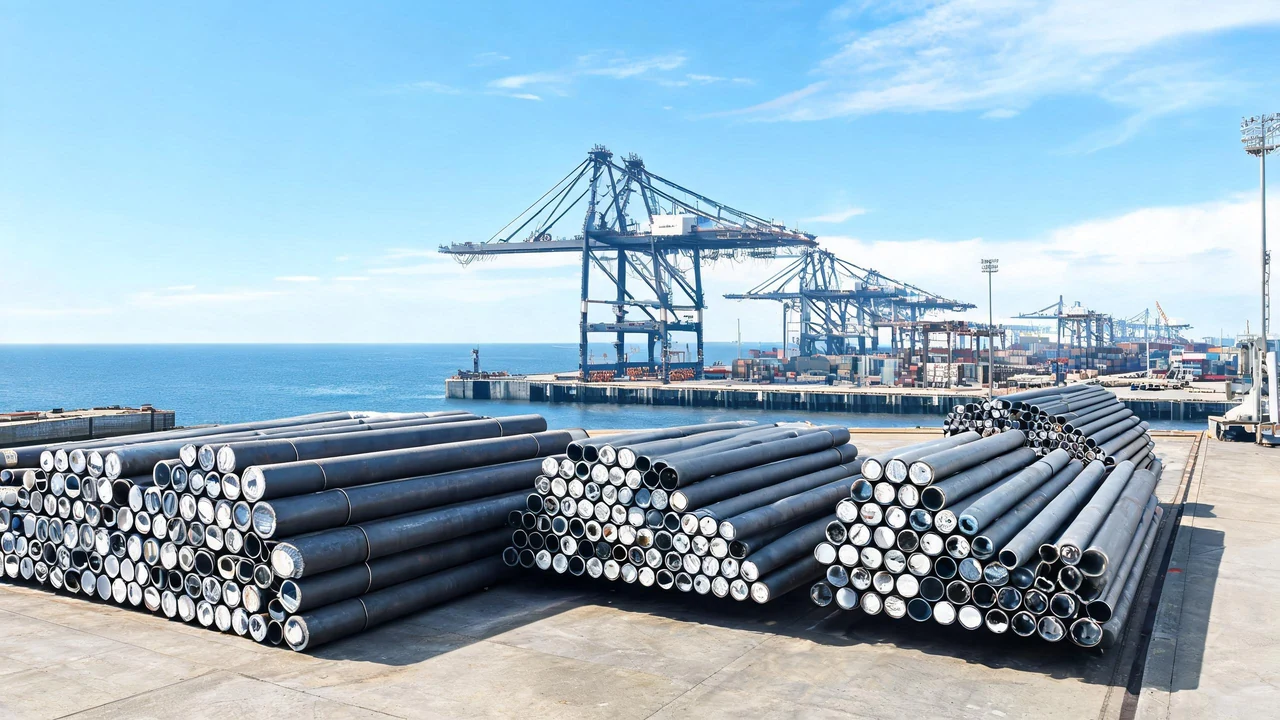
Chile’s import formalities sit with the Servicio Nacional de Aduanas, the national customs service, which runs the importer and exporter procedures and the online formalities. That matters before the order is placed, because the declaration is filed in the importer’s name and the invoice has to describe the goods exactly as the mill certificates do. The pipe itself does not change between markets; the paperwork and the point at which risk moves do.
Mejor Steel is the export agent for the mills that make your material: one contract, one delivery date, and the mill named on the quotation. How we supply
We reply within one business day, Monday to Friday 09:00-18:00 CST. Or write to info@mejorsteel.com / WhatsApp.
What buyers in this market order from China
- Line pipe to API 5L – Grade B and X42 to X70, PSL1 and PSL2 – for water, gas and gathering lines.
- OCTG to API 5CT – casing and tubing in J55, K55, N80, L80 and the hardness controlled grades.
- Seamless pipe to ASTM A106 and A53 – for steam, process and general mechanical service.
- Large diameter welded pipe – for water transmission, drainage and piling.
The list is the one the neighbouring guides carry, because the pipe does not change with the destination.
Trade terms, and the one thing buyers get wrong
The Incoterms® rules are published by the ICC: eleven three-letter terms allocating cost, risk and obligations. FOB, CFR and CIF apply to sea and inland waterway transport. Chile’s main container gateways are San Antonio and Valparaiso, and that is the port of discharge named on an enquiry.
| Term | Main carriage | Risk passes | What the buyer controls |
|---|---|---|---|
| FOB | Buyer books and pays | When goods are on board at the port of shipment | Freight, sailing schedule, insurance |
| CFR | Seller pays to the named destination port | When goods are on board at the port of shipment | Insurance from loading onwards |
| CIF | Seller pays carriage and insurance to destination | When goods are on board at the port of shipment | Nothing further, but check what the cover includes |
The table follows the ICC’s Incoterms® 2020 rules; the edition named in the contract governs, and the term has to match how the cargo is handed over — pipe in containers and pipe as breakbulk do not follow the same rule.
The mistake is to read CIF as "the seller carries the risk to the port". Under all three terms the risk transfers when the goods are on board at the loading port, so the cargo insurance the buyer arranges from that moment is not a formality.
Who does what at the local end
The importer or its customs broker: holds the tax registration the declaration is filed under, files the import declaration with the Servicio Nacional de Aduanas, pays the duties and taxes assessed, and clears the cargo. The procedure and the tariff treatment are confirmed by the broker against the rules in force on the day of import.
We, as the supplier: issue the commercial invoice, packing list, bill of lading, mill test certificates and certificate of origin where one is required — all describing the same goods in the same terms.
The classification is the pivot. If the invoice describes the pipe loosely (“steel pipe”), the broker has to interpret it, and an interpretation is what turns a routine entry into a dispute. The description on the invoice, the certificates and the packing list should be written from the same specification.
The documents have to agree with each other
- Invoice: grade, outside diameter, wall thickness, length, quantity and coating, matching the certificates.
- Packing list: bundle numbers and weights reconciling with the invoice and the certificates.
- Bill of lading: consistent with the term — on board for FOB, CFR and CIF.
- Mill test certificates: heat numbers traceable to the bundles.
- Certificate of origin: matching the invoice and the shipping documents.
What to send with the enquiry
- Grade and standard, with the edition the project works to.
- Outside diameter, wall thickness, length and end preparation.
- Coating or lining, and the intended service.
- Inspection scope, and whether a third party report is required.
- Trade term and port, and whether the cargo ships in containers or as breakbulk.
- Documents required, including whether a certificate of origin is needed.
- Quantity in tonnes and in lengths, and the delivery window.
Frequently asked questions
Can you clear customs for us?
No. The declaration is filed in the importer’s name, under its own registration, with the customs authority that administers the entry. What we provide is a document set that describes the goods accurately and consistently, so the declaration is built on facts rather than on an interpretation.
Should we ask for FOB or CIF?
FOB when you want control of the freight and the sailing schedule; CIF when you want a single delivered-port price and do not want to manage the booking. Either way, arrange your own cargo insurance from the moment the pipe is on board, because that is where the risk transfers under both terms.
How do we avoid a classification dispute?
Describe the goods in the invoice exactly as they are: standard, grade, outside diameter, wall thickness, length, end finish and coating. Then have the broker confirm the classification before shipment. A vague description is what turns a routine entry into an argument.
Where to go next
- Mill test certificate – what it must show and when it is not enough.
- Incoterms for steel pipe – the terms compared.
- Peru – the same guide for the Peruvian market.
- API 5L line pipe – grades and dimensions.
- All market guides – the same checklist for the other destinations.
- Get a quote – send the specification, the port and the term.
Quoting into Chile? Send the grade and standard, the diameter and wall, the length, the trade term and the port. We describe the goods exactly as the certificates do, so the declaration is built on facts.
Request a quotation