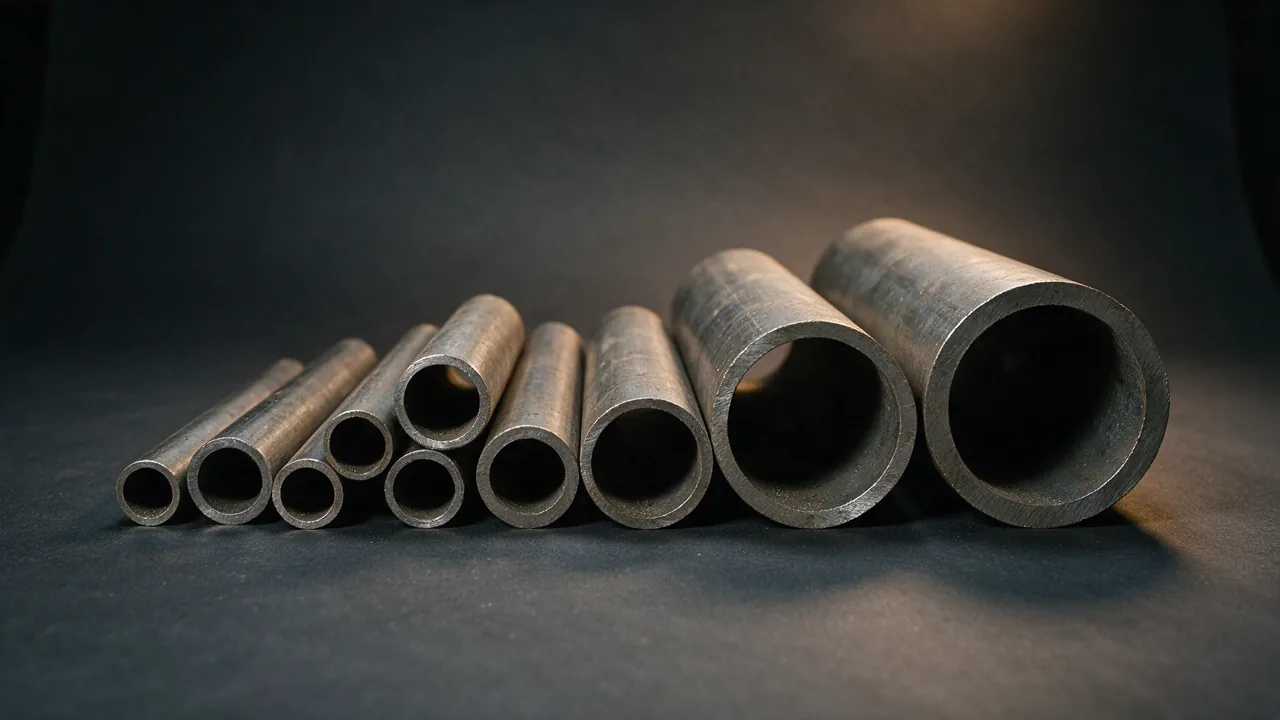
A steel pipe specification is three things at once: a standard that fixes the rules, a grade that fixes the strength and the chemistry, and a delivery condition that fixes how the steel was made and how it was tested. These pages take one commonly ordered grade at a time and set out what the standard actually requires of it.
How to read a grade
- The standard — API 5L, ASTM A106, API 5CTSets the dimensions, the test methods, the tolerances and the marking. Two products made to different standards are different purchase items even when they look identical.
- The grade — X65, Grade B, N80Sets the minimum yield strength, the tensile strength and the chemistry limits. This is the part that is quoted, and the part that appears on the mill certificate.
- The delivery condition — PSL2, N, QSets the heat treatment and the level of testing. The same grade name can be supplied in more than one delivery condition, and they are not interchangeable.
Grade pages in this section
| Grade | Standard | What it is used for |
|---|---|---|
| API 5L Grade B pipe | API 5L | The low-strength line pipe grade, in PSL1 and PSL2. |
| API 5L X42 pipe | API 5L | Line pipe one step above Grade B, for water mains and low-pressure lines. |
| API 5L X52 pipe | API 5L | Medium-strength line pipe for gathering and transmission lines. |
| API 5L X60 pipe | API 5L | The most widely specified transmission grade, for oil and gas mains. |
| API 5L X65 PSL2 pipe | API 5L | High-strength line pipe for transmission pipelines, including sour service with the right delivery condition. |
| API 5L X70 pipe | API 5L | High-strength line pipe for large-diameter, high-pressure transmission. |
| API 5L X80 pipe | API 5L | The highest-strength line pipe grade in routine use, in the Q and M delivery conditions. |
| ASTM A106 Grade B pipe | ASTM A106 | Seamless carbon steel pipe for high-temperature and higher-pressure service. |
| ASTM A106 Grade C pipe | ASTM A106 | Seamless carbon steel pipe for high-temperature service where Grade B is not strong enough. |
| ASTM A53 Grade B pipe | ASTM A53 | General-purpose welded and seamless pipe for ordinary service. |
| ASTM A333 Grade 3 pipe | ASTM A333 | 3.5% nickel pipe for low-temperature service, impact tested at -150 degrees F (-100 degrees C). |
| ASTM A333 Grade 6 pipe | ASTM A333 | Carbon steel pipe for low-temperature service, impact tested at -45 degrees C. |
| ASTM A335 P11 pipe | ASTM A335 | 1.25Cr-0.5Mo alloy pipe for steam and refinery process lines. |
| ASTM A335 P22 pipe | ASTM A335 | 2.25Cr-1Mo alloy pipe for steam and refinery process lines. |
| ASTM A335 P91 pipe | ASTM A335 | 9Cr-1Mo-V alloy pipe for main steam and hot reheat lines in power plants. |
| ASTM A213 T11 tube | ASTM A213 | Seamless 1.25Cr-0.5Mo tube for superheaters and heat exchangers – the tube form of the P11 chemistry. |
| ASTM A179 tube | ASTM A179 | Seamless cold-drawn low-carbon tube for heat exchangers and condensers. |
| ASTM A192 tube | ASTM A192 | Seamless carbon steel boiler tube for high-pressure service. |
| ASTM A210 Grade A-1 tube | ASTM A210 | Seamless medium-carbon tube for high-pressure boiler and superheater service. |
| ASTM A252 piling pipe | ASTM A252 | Welded and seamless pipe piles graded on tensile strength, for foundation and marine work. |
| ASTM A234 WPB elbow | ASTM A234 | Wrought carbon steel fittings for moderate and high-temperature service. |
| ASTM A105 flange | ASTM A105 | Forged carbon steel flange material and its ASME B16.5 ratings. |
| ASTM A182 F316 flange | ASTM A182 | Forged austenitic stainless steel flange material and its ASME B16.5 ratings. |
| ASTM A312 TP304 pipe | ASTM A312 | The general-purpose austenitic stainless steel pipe grade. |
| ASTM A312 TP316 pipe | ASTM A312 | Stainless pipe with molybdenum, for chloride-bearing service. |
| ASTM A312 TP316L pipe | ASTM A312 | Low-carbon stainless pipe, weldable in most service without post-weld solution annealing. |
| API 5CT J55 casing | API 5CT | The standard entry-level casing grade, for shallower and lower-pressure wells. |
| API 5CT K55 casing | API 5CT | Medium-strength casing for surface and intermediate strings. |
| API 5CT N80 casing | API 5CT | Casing in the as-rolled N80-1 and the quenched and tempered N80Q conditions. |
| API 5CT N80Q casing | API 5CT | Casing and tubing for wells of moderate depth and pressure. |
| API 5CT P110 casing | API 5CT | High-strength casing for deep, high-pressure wells. |
| API 5CT Q125 casing | API 5CT | The highest standard-strength casing grade, for deep high-pressure wells. |
| API 5CT L80 tubing | API 5CT | Casing and tubing for sour service, where hardness is controlled. |
| API 5CT 13Cr tubing | API 5CT | 13% chromium tubing for CO2-bearing service where carbon steel is not adequate. |
| API 11B Grade D sucker rod | API 11B | High-strength sucker rods for artificial lift, graded by minimum tensile strength. |
Choosing between grades
Three questions between them decide almost every grade selection, and they are answered in this order:
- 1. How strong does it need to be?The wall thickness comes out of the design pressure and the design code, and the required wall thickness is what sets the minimum yield strength the grade has to meet.
- 2. How hot or how cold does it get?Temperature narrows the choice, because some grades are only qualified down to a stated temperature and low-temperature service is qualified by impact testing rather than by strength.
- 3. Is there hydrogen sulphide?Sour service changes the basis of selection from strength to hardness, under NACE MR0175 / ISO 15156. A harder, stronger steel is the wrong answer in H2S, which is why the sour-service grades are the ones with the hardness ceiling.
Related pages
- Sour service – why H2S means selecting on hardness rather than strength
- Low temperature service – impact toughness and where a grade stops being qualified
- Pipe schedule chart – wall thickness for every schedule in ASME B36.10M and B36.19M
- Steel pipe weight chart – nominal weight from NPS 1/8 to NPS 24
- Steel pipe and line pipe – seamless, ERW, LSAW and SSAW, coated and uncoated
- Casing and tubing – API 5CT OCTG supplied as a complete package
Frequently asked questions
What is the difference between a standard and a grade?
The standard is the document that sets the rules — dimensions, test methods, tolerances and marking. The grade is the designation inside that standard that fixes the minimum yield strength, the tensile strength and the chemistry limits. API 5L is a standard; X65 is a grade within it.
What does PSL2 mean in API 5L?
Product Specification Level 2 is the more tightly controlled of the two levels in API 5L. It carries mandatory chemistry limits, more testing and tighter tolerances than PSL1, and it is the level most line pipe is ordered at. Whether PSL1 or PSL2 applies changes what the pipe has to be tested for, so it belongs on the enquiry.
What does the Q in N80Q mean?
The letter describes the delivery condition. N80Q is quenched and tempered, which is why it has a controlled hardness and a defined impact test where the as-rolled N80-1 grade does not. The same grade letter in two delivery conditions is not the same purchase item.
Which grade should I specify?
Start from the design: the code or the project specification usually names the standard and the grade together. Where it does not, the wall thickness required by the design pressure comes first, then the temperature, then whether the stream contains hydrogen sulphide. Send us the design conditions and we will tell you which grade they point to.
Dimension reference pages
Tables for the standards that decide flange and fitting dimensions. Each page gives the dimensions in millimetres, the rule that governs them, and what to state on an enquiry.
- ASME B16.5 flange dimensions — Class 150, NPS 1/2 to 12, with class and facing rules
- ASME B16.47 flange dimensions — Series A Class 150, NPS 26 to 48, and the Series A versus B rule
- ASME B16.9 fitting dimensions — 90° long radius elbow and equal tee centre-to-end, NPS 1/2 to 24
- ASME B16.11 fittings — classes 3000 and 6000, sizes and the socket weld versus threaded decision
- ASTM A182 F304 and F316 forged fittings — socket weld, threaded and branch fittings
- ASTM A403 WP304 and WP316 butt weld fittings — wrought stainless fittings to B16.9
- MSS SP-97 olets — weldolet, sockolet and threadolet types, sizes and selection
Send us the design conditions — pressure, temperature, fluid and size — and we will tell you which standard and grade they point to. Not sure which grade the job needs?