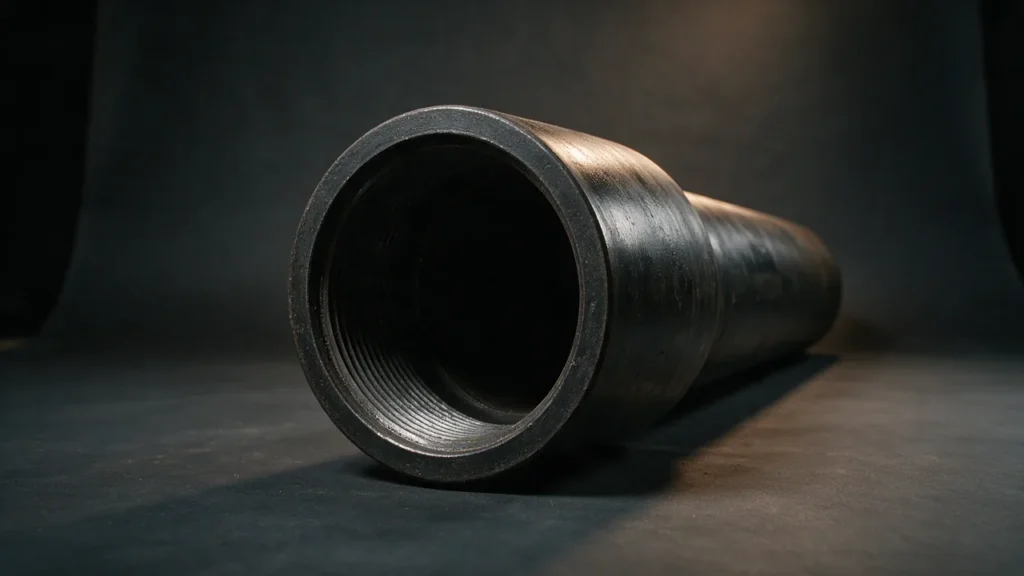
Casing and tubing are the two OCTG strings that make an oil or gas well work: casing lines the hole and supports it, tubing carries the produced fluid to the surface. Both are bought by outside diameter and weight per foot, threaded with a connection that must hold pressure, and released against an API 5CT mill test certificate. Mejor Steel supplies casing and tubing as an export package from China: casing 4-1/2 to 20 in and tubing 1.05 to 4-1/2 in, in API 5CT grades from J55 and K55 up through P110 and Q125, with standard and premium connections and the couplings and accessories that complete the string.
API 5CT · API 5B · ISO 11960 · API 5C3 · API Spec 10D · API RP 5A5 · ISO 13679 · NACE MR0175
Send an enquiryWe reply with availability and pricing within one business day.
- Standards: API 5CT · API 5B · ISO 11960 · API 5C3 · API Spec 10D · API RP 5A5 · ISO 13679 · NACE MR0175
- 9 products in this line
- Certificate: EN 10204 3.1 with every order, 3.2 on request
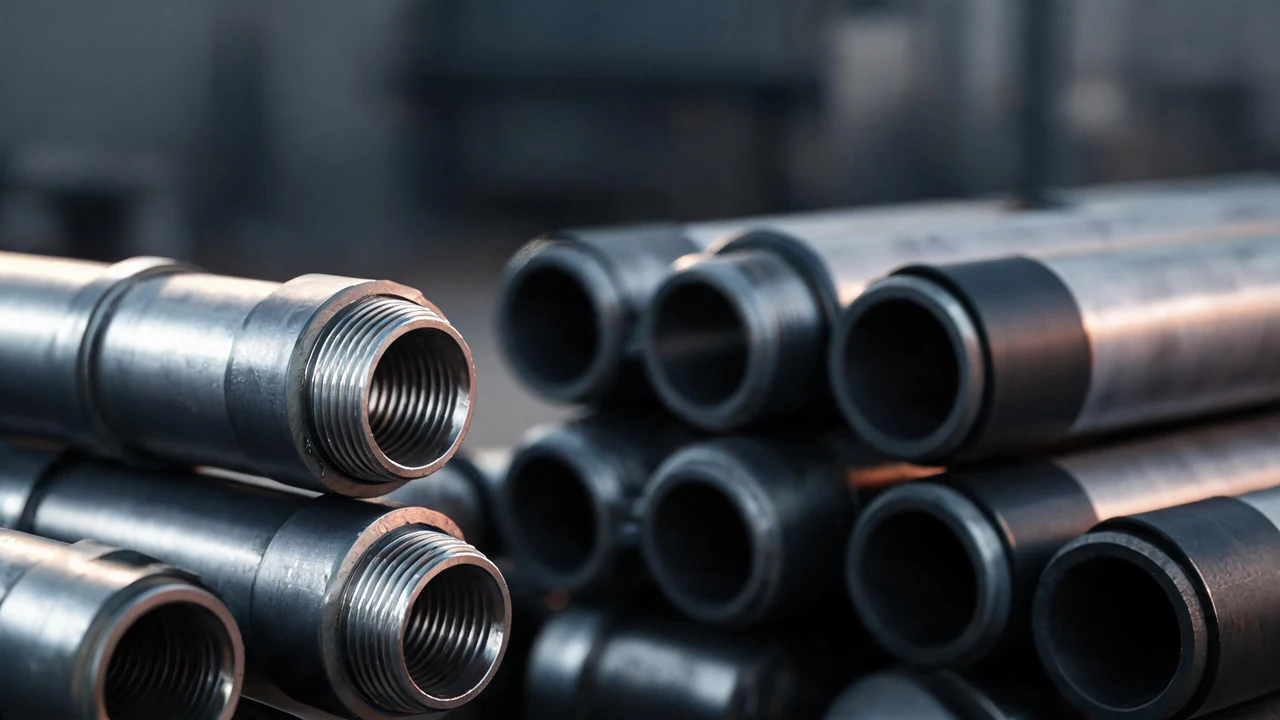
Mejor Steel is the export agent for the mills that make your material: one contract, one delivery date, and the mill named on the quotation. How we supply
We reply within one business day, Monday to Friday 09:00-18:00 CST. Or write to info@mejorsteel.com / WhatsApp.
What OCTG means
OCTG stands for oil country tubular goods — the family of seamless steel tube used downhole in oil and gas wells. It is not a single product and it is not line pipe: line pipe moves the fluid across country on the surface, OCTG lives in the wellbore.
- Casing — the pipe that lines the drilled hole and is cemented in place, in concentric strings from the surface to the producing zone.
- Tubing — the smaller string run inside the casing that carries oil or gas from the formation to the wellhead.
- Drill pipe — the thick-walled rotating string that turns the bit and circulates drilling mud; supplied separately from casing and tubing.
- Couplings, pup joints and accessories — the threaded connections and short lengths that make the string up and protect it.
The casing and tubing pages in this line are grouped by thread type — API STC, LTC, BTC and EUE/NUE — and by grade, from J55 and K55 through N80, L80 and P110. Each product page carries its own grade table and the inspection that applies.
If you are deciding between the two strings, see casing vs tubing.
What a well’s OCTG consists of
OCTG appears on an enquiry as one word, but a well does not have one casing string. It has four or five of them, run in sequence, and each one is designed against a different load case. When an enquiry says only “casing”, the first question back is which string it is for — the grade and the connection that suit a surface string are rarely what the production string needs.
| String | What it does in the well | What usually fixes its specification | Covered here |
|---|---|---|---|
| Conductor casing | The first string and the shallowest. Holds back loose surface formations so drilling can continue below them. | Diameter and wall, and how it is installed. Frequently welded rather than threaded, and sometimes driven. | API 5CT casing pipe |
| Surface casing | Set below the conductor. Isolates shallow water-bearing zones and gives the blowout preventer a foundation to sit on. | Burst from the maximum pressure the well can see at surface. J55 or K55 covers most. | J55 / K55 |
| Intermediate casing | Isolates one problem formation — lost circulation, swelling shale, abnormal pressure — so the next section can be drilled through it. | Collapse and burst at the deepest point of the string; N80 where the load needs it. | N80 / N80Q |
| Production casing or liner | The last full string opposite the producing zone, or a liner that stops short of surface and hangs from the string above it. | The whole load case plus the reservoir fluid — which is where the sour question enters. | Casing pipe / Sour service |
| Production tubing | The inner string the well produces through. It is pulled and replaced during workovers, unlike casing. | Internal pressure, the drift diameter for the tools that must pass through it, and the connection. | API 5CT tubing pipe |
| Accessories | Couplings, pup joints, crossovers, centralizers and thread protectors that make the string up and protect it. | Grade and thread form matching the pipe, and the length that lands the string where the programme says. | The accessory set |
A string that is quoted as “casing” without naming the section is the most common reason an OCTG enquiry gets a second quotation.
What we supply: sizes, lengths and connections
The table below is the size and length range for this line. Wall follows the API 5CT weight schedule for the pipe; the exact wall per size and grade is on each product page.
| Product | Outside diameter | Connection | Length |
|---|---|---|---|
| Casing pipe | 4-1/2–20 in (114.3–508 mm) | STC, LTC, BTC, premium gas-tight | R1 4.88–7.62 m, R2 7.62–10.36 m, R3 10.36–14.63 m |
| Tubing pipe | 1.05–4-1/2 in (26.7–114.3 mm) | NUE, EUE, premium gas-tight | R1 6.10–7.32 m, R2 8.53–9.75 m, R3 11.58–12.80 m |
| Premium connection casing & tubing | 2-3/8–13-3/8 in (60.3–339.7 mm) | Metal-to-metal seal with torque shoulder | R2, R3 |
| Casing coupling | 4-1/2–20 in (114.3–508 mm) | STC, LTC, BTC | Typically 200–300 mm |
| Tubing coupling | Matching 1.05–4-1/2 in tubing | NUE, EUE | Typically 100–160 mm |
| Crossover | 2-3/8–20 in (60.3–508 mm) | Any combination of two thread forms or sizes | 300–1,200 mm |
| Pup joint | Casing 4-1/2–20 in, tubing 1.05–4-1/2 in | STC, LTC, BTC, EUE, NUE, premium | 2, 3, 4, 6, 8, 10, 12 ft, or custom |
| Centralizer | For 4-1/2–20 in casing | Stop collar or integral | Bow 200–400 mm, rigid 150–300 mm |
| Thread protector | For 1.05–20 in pipe | Threaded, snap-on, push-fit | 80–300 mm |
Grades and the inspection that applies to each are set out on the grade pages linked in the section below.
Which decisions sit with the well design, and which sit with the order
An OCTG string is designed rather than selected. Burst, collapse, tensile and triaxial load cases, the temperature and the produced fluid come out of the operator’s well design, and the grade, the wall and the connection follow from them. That work belongs to the operator or the drilling contractor, and the load data has to reach the enquiry — a quotation built from a well depth alone is a quotation that will be replaced.
What the order itself has to settle is narrower, and it is what a workable quotation turns on:
- Whether the mill rolls that grade in the size, weight and range asked for, and whether the connection is the mill’s standard thread or a licensed premium design.
- The certificate type and the inspection scope, stated on the order rather than raised after the heat is rolled.
- Whether the accessories travel with the pipe or on a separate order.
- The loading window and the port of discharge.
The order in which the questions are answered matters as much as the answers. The sour question comes first, because it removes whole grade families before strength is considered. Then the string, because it fixes the load case. Grade and wall follow, then the connection, then the accessories and the documentation. Taking them the other way round is what produces a second quotation.
Each grade has its own page with the composition, the mechanical properties, the hardness and the inspection that applies to it:
The load cases themselves are not interchangeable between strings. A grade chosen for the intermediate string carries no authority in the production string, even at the same diameter and wall.
Sour service is decided before strength, not after
Whether a well is sour is the first fork, because it removes grades that would otherwise look correct. NACE MR0175 / ISO 15156 works from the H2S partial pressure together with pH, chloride content, temperature and total pressure, not from the fluid name. A commonly used screening value is an H2S partial pressure of about 0.3 kPa (0.05 psi): above it the service is normally treated as sour, and below it the full ISO 15156 rules can still apply, so the screening value is a flag rather than an answer.
What the fork does to the grade list is the part that gets missed:
- N80 and P110 are not sour-service grades. API 5CT puts no hardness ceiling on either, and hardness is what resistance to sulphide stress cracking turns on.
- L80 is capped at 23 HRC, and NACE MR0175 / ISO 15156 applies a 22 HRC limit to carbon and low-alloy steels. The restricted yield range of 552 to 655 MPa comes with that hardness control, not instead of it.
- C90, T95, C110 and C125 carry a hardness ceiling at higher strength, and L80 9Cr and 13Cr are the chromium versions for wells where CO2 is the controlling mechanism rather than H2S.
- The qualification is against the actual service conditions — partial pressures, temperature, pH and chloride — not against the grade name on its own.
Two versions of this mistake turn up. In the first the string is sweet and the well turns sour: if the H2S reading arrives after the pipe has been rolled, the string is not re-graded, it is replaced, because hardness belongs to the heat and no heat treatment can be added at the port. In the second the enquiry is priced on N80 and re-priced once the reservoir fluid is disclosed.
Two pages carry the detail: sour service applications for the screening inputs and the material map, and NACE MR0175 in practice for how the standard is applied. The grade-level limits are on the L80, T95 and 13Cr pages.
The accessory set that travels with a string
A casing or tubing order is not one product. The accessories are bought with the string, and each carries a decision that can quietly mismatch the pipe it is meant to join.
| Accessory | What it does | The decision it carries |
|---|---|---|
| Casing coupling | Joins two joints and is made up on one end at the mill before shipment. | The coupling grade against the pipe body grade, and the thread form it has to match. |
| Tubing coupling | The same job on the smaller production string, in EU or NU form. | Upset or non-upset, which is what decides whether the joint or the pipe body is the weak point. |
| Crossover | Joins two different sizes or thread forms in one string, such as a liner to the casing above it. | Both thread forms and both grades — not only the outside diameter. |
| Pup joint | A short length that lands the string at the depth the programme calls for. | The exact length and the thread. These are usually ordered late, and a late short item delays the whole string. |
| Centralizer | Keeps the casing off the borehole wall so the cement covers the full circumference. | The hole size and casing size it has to fit, and where it goes in the string. |
| Thread protector | Protects the threads in transit and in storage before the string is run. | Whether the mill’s standard protector is accepted, and what happens when they come off before the pipe is run. |
Where the well is gas bearing, HPHT or deviated, the connection stops being a mill default and becomes a qualification: premium connections are proprietary designs tested to ISO 13679 application levels, and they are not interchangeable between manufacturers.
Where the trade-offs sit in an OCTG package
Most of an OCTG order is looked up rather than decided: the size and the weight come off the programme, and the grade follows the load case. Four decisions are the exception. They are trade-offs, and taking them the other way round is the usual reason one quotation becomes three.
| The decision | The two ways it is usually met | What it changes in the well | When the cheaper side is the wrong one |
|---|---|---|---|
| How the body is made | Seamless, or welded (ERW, HFW, SAW) | A welded tubular carries a longitudinal weld that is an inspected feature of the product; a seamless one does not. Both are made to API 5CT, and each is rolled across a defined range of sizes and grades rather than all of them. | Where the design is collapse-driven or sour-service-driven, or where the size and grade asked for are outside what the welded mills roll. The choice is settled by the standard’s scope and by what is rolled, not by preference. |
| How the joints are threaded | API standard threads (STC, LTC, BTC), or a premium connection | Standard threads seal on the thread compound and the interference of the make-up; a premium connection adds a metal-to-metal seal and a torque shoulder. The premium connection page sets out the difference in the connection itself. | Where the well is a gas well, HPHT, deviated or extended-reach, or where the string will be made up and broken out repeatedly. The seal, not the pipe body, is what is being bought. |
| How the load case is met | Raise the grade, or raise the weight (wall) | Grade raises burst and tensile; wall raises collapse and changes the drift diameter. The two are not interchangeable, and the four load cases behind them are worked through on the casing page. | Where collapse or drift governs, moving up a grade buys nothing that the design needs, while a heavier wall costs drift and metres per tonne. |
| What the joint can carry | A coupling in the pipe grade, or a higher grade or special-material coupling | In a long string the joint, not the body, is frequently the item that limits the design, and the coupling sees the same produced fluid as the pipe. | Where the string is tensile-limited, or where the coupling sits in the sour section of the well. This is the one item that is regularly bought as an afterthought and then does not match. |
| Which pipe is actually asked for | The string as a programme, or a diameter on its own | A diameter fixes nothing by itself: the same outside diameter is supplied at several weights, and the weight is what fixes the wall. The seamless and welded comparison is the related reading for the first row above. | Always. An enquiry that names a diameter and a grade but no weight is the single most common reason a casing or tubing quotation comes back with questions instead of a price. |
These are engineering trade-offs, and the choice belongs to the well design rather than to the supplier. What we do on the order is confirm what is rolled and inspected for the size, grade and connection that came out of that design, and say so before the heat is rolled rather than after.
Where OCTG orders go wrong
Almost every problem on an OCTG order traces back to a decision taken in the wrong order, or to a requirement that was left off the enquiry and raised later. These are the six that end in a second quotation or a rejected delivery.
| What goes wrong | Why it happens | What prevents it |
|---|---|---|
| The grade is re-quoted after the enquiry | The enquiry gave a well depth or a mud weight instead of the load case, so the first quotation was built on an assumption. | State the design collapse and burst figures, and the section the pipe is going into. |
| A sour string ordered in N80 or P110 | Neither grade has a hardness ceiling in API 5CT, so neither is qualified for wet H2S service. | Answer the sour question before the grade is chosen, and put the partial pressures on the enquiry. |
| A sound pipe body with an unsound joint | The coupling grade or thread form was assumed rather than specified, and the joint becomes the weakest element in the string. | Specify the coupling grade with the pipe grade, and say whether it is supplied made up. |
| The certificate is refused at the port | The order named the standard but not the certificate type or who attends the inspection. | Write “EN 10204 3.1” or “3.2 with an independent inspector” on the order, with the test items. See the mill certificate guide. |
| Accessories that do not match the pipe | Couplings, pup joints and crossovers were bought on separate orders, so grade, thread and documentation drifted apart. | Put pipe and accessories on one enquiry, even when they ship together. |
| The string does not tally on site | The length range was not fixed, so the joint count and the handling equipment were planned against a different joint length. | Fix R1, R2 or R3 and the total metres on the order. |
Frequently asked questions
Is OCTG the same as line pipe?
No, and the two are not interchangeable. Line pipe is made to API 5L and carries fluid along a route, ordered by grade such as B, X42 or X70 and by PSL. OCTG is made to API 5CT for the wellbore, and its grades run H40, J55, K55, N80, L80, C90, R95, T95, P110 and Q125. The grade systems, the connections and the testing are different families, which is why a quotation for pipe and a quotation for casing do not follow the same rules.
Does OCTG include drill pipe?
Commercially the term is used loosely, but drill pipe is a different product. It is rotated to turn the bit and it threads with rotary shouldered connections, so it is specified under its own standard rather than to API 5CT, and it is bought and stocked separately from casing and tubing. When an order is placed for casing, tubing and accessories, drill pipe is quoted on its own basis.
Which OCTG grades are qualified for sour service?
The grades with a controlled maximum hardness: L80, C90, T95, C110 and C125. Each is qualified only inside the limits that NACE MR0175 / ISO 15156 sets for the actual H2S partial pressure, temperature, pH and chloride content, so the grade name alone does not make a string sour-service. N80 and P110 are not sour-service grades, and Q125 has no fixed hardness ceiling in API 5CT. See sour service for how the conditions are assessed.
Is OCTG the same as casing?
No. Casing is one part of OCTG. The term is used when the whole order is being quoted together — casing, tubing, couplings, pup joints, crossovers and the accessories that go with them — which is why an OCTG enquiry can cover several strings of different grades at once.
What to state on the enquiry
- Outside diameter and weight per foot, or wall thickness
- Grade: J55, K55, N80, L80, P110 or 13Cr
- Connection: STC, LTC, BTC, EUE, NUE or premium
- Range length: R1, R2 or R3
- Whether sour service applies
- Quantity and destination port
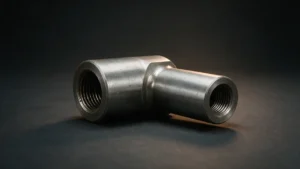
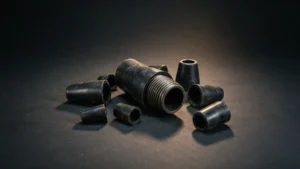
Casing & Tubing Accessories4
 Casing and Tubing Pup JointAPI 5CT · API 5BPup joints to API 5CT in lengths from 2 to 12 feet for adjusting casing and tubing string length, in all standard…
- Casing CentralizerAPI Spec 10D · API 5CTBow spring, rigid and solid casing centralizers in sizes from 4-1/2 inch to 20 inch for improving cement coverage and reducing differential…
- Casing Crossover and Transition AdapterAPI 5CT · API 5BCrossover subs and casing transition adapters joining different sizes, weights, grades or thread types in a casing or tubing string.
- Casing, Tubing & Drill Pipe Thread ProtectorsAPI 5CT · API 5BPlastic and steel thread protectors for casing, tubing, line pipe and drill pipe, protecting threads and sealing surfaces during transport and storage.
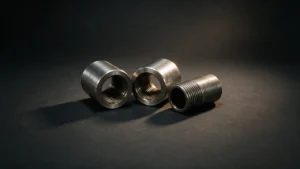
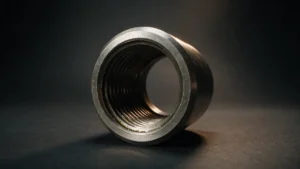
Couplings2
- API 5CT Casing CouplingAPI 5CT · API 5BSeamless casing couplings to API 5CT in grades J55, K55, N80, L80 and P110, in STC, LTC and BTC thread forms, from…
- API 5CT Tubing CouplingAPI 5CT · API 5BSeamless tubing couplings to API 5CT in grades J55, K55, N80, L80 and P110 for NUE and EUE connections from 1.05 inch…
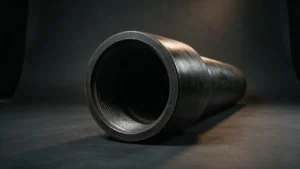
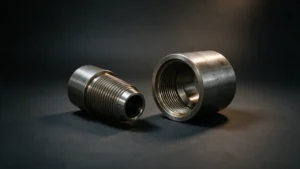
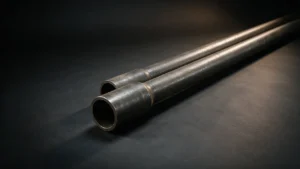
Casing & Tubing – grades, materials and ordering
| Grades | J55 · K55 · N80 · L80 · P110 · Q125 · N80-1 · N80Q · C90 · R95 · T95 · C110 · C125 · N/A - accessory item · 4130 · 4140 |
|---|---|
| Materials | Seamless carbon steel · Alloy steel · Carbon steel · 13Cr stainless on request · 13Cr on request · Stainless steel · Aluminum alloy · Composite |
| Typical service |
|
| Minimum order | One bundle or one truckload; mixed sizes within a bundle accepted. |
| Lead time | Stock sizes: 7-15 days. Mill run / non-stock: 4-6 weeks after order confirmation. |
| Packing | Sea-worthy export packing: bundled by size, plastic caps on both ends, corrosion protection on request, stencilled with size, grade and heat number. |
How an order runs end to end — payment terms, inspection and release, packing and marking, and the documents that travel with the goods — is set out on how to order. Which standard applies to your service is covered under standards and grades; what is verified and tested on every order, and what the certificate says, under quality control. Which documents can travel with an order, and who issues each one, is listed under certifications and documents; who you would be buying from, and what we are accountable for on an order, is on about Mejor Steel.
Need a specific size, grade or quantity? Send the specification and the destination port and we will reply with availability and pricing.
Request a quotation