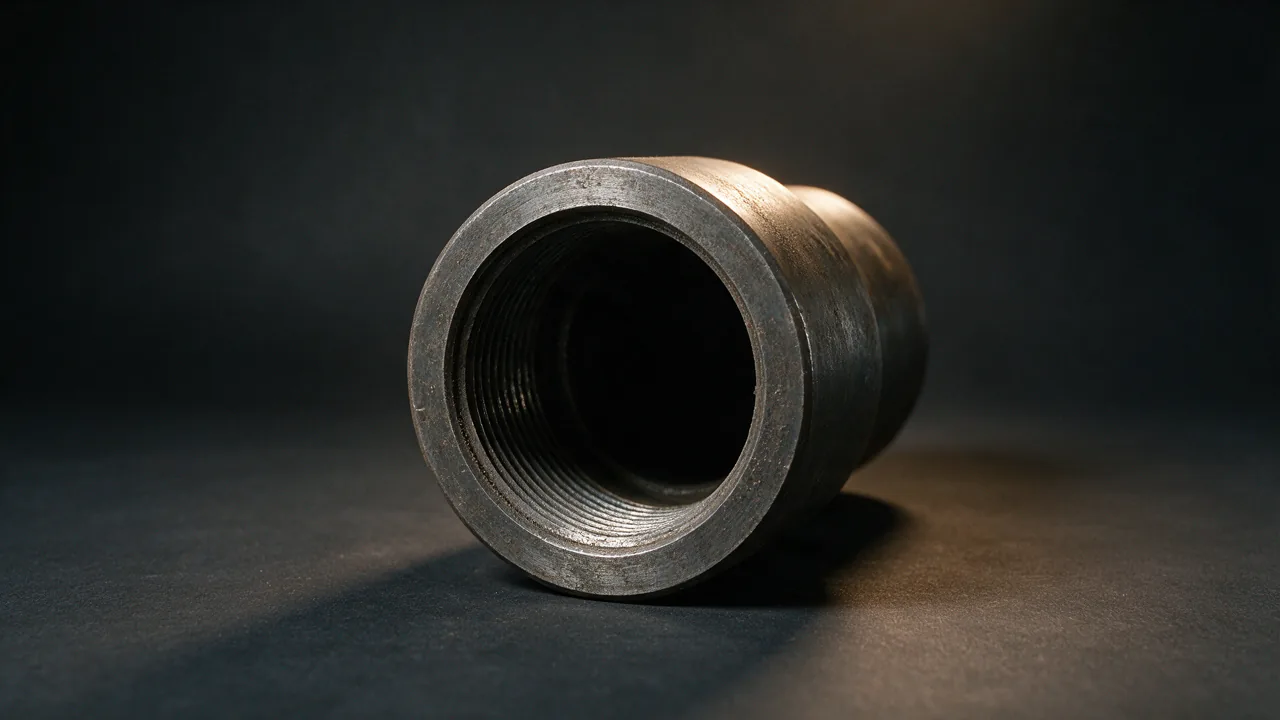
API 5CT P110 casing is a high-strength quenched and tempered casing grade with a minimum yield strength of 758 MPa (110,000 psi) and a minimum tensile strength of 862 MPa (125,000 psi). It is selected for deep, high-pressure wells where higher collapse and burst resistance is required.
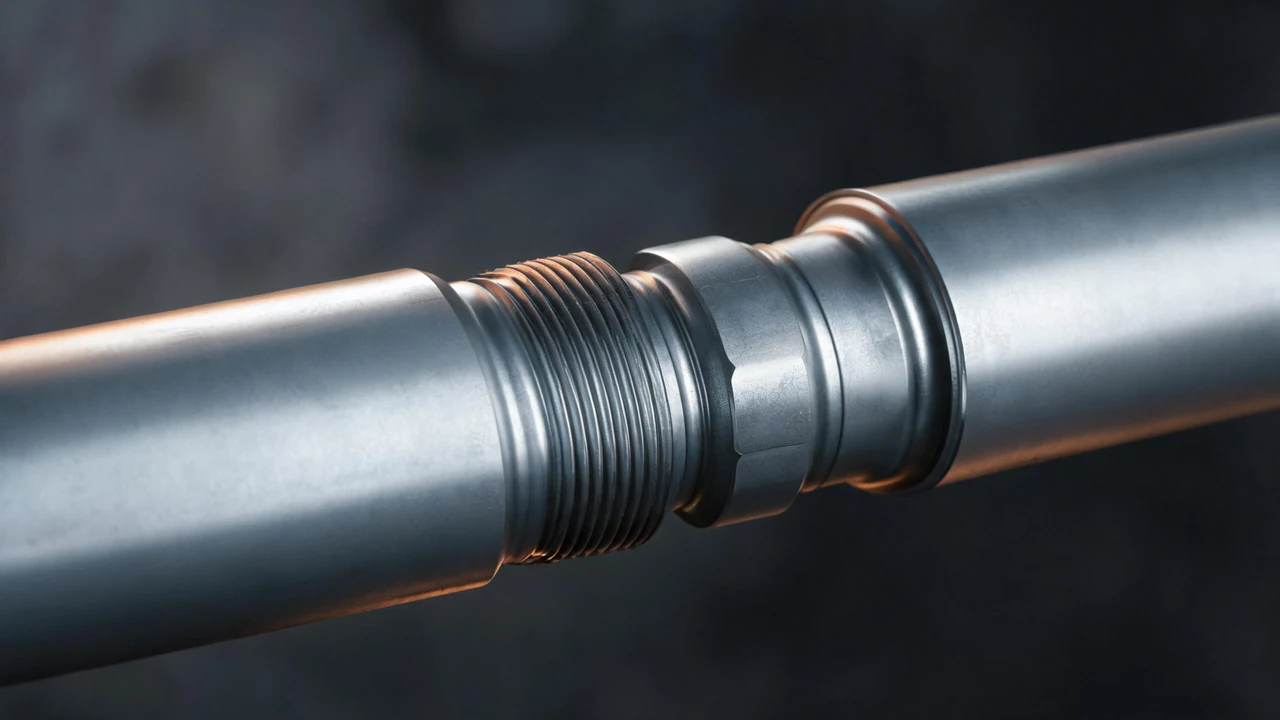
Download API 5CT P110 Casing data sheet (PDF) One-page summary of the supply range, chemistry, mechanical properties and inspection documents on this page. The standard is the governing document.
Mejor Steel is the export agent for the mills that make your material: one contract, one delivery date, and the mill named on the quotation. How we supply
We reply within one business day, Monday to Friday 09:00-18:00 CST. Or write to info@mejorsteel.com / WhatsApp.
Size range and specification
- Outside diameter 4-1/2 inch – 20 inch (114.3 – 508 mm)
- Most quoted sizes 4-1/2, 5, 5-1/2, 7, 9-5/8, 10-3/4 and 13-3/8 inch
- Wall thickness 6.88 – 22.22 mm depending on size and weight
- Length R1 4.88 – 7.62 m, R2 7.62 – 10.36 m, R3 10.36 – 14.63 m
- Ends STC, LTC, BTC or premium connection; coupling supplied with the pipe
- Surface treatment Black varnish, phosphate, or as agreed
- Manufacturing process Hot rolled seamless, quenched and tempered
- Delivery standard API 5CT / ISO 11960, PSL1 or PSL2
How this grade is supplied
- Inspection Inspected by the producing mill’s own inspection department, which is independent of production, against the delivery standard above. Third-party inspection — SGS, BV or TUV, or an inspector you send yourself — can be arranged at the mill or before shipment; give us the dates and the scope at the order stage.
- Certificate A mill test certificate to EN 10204 3.1 showing the heat number, the chemical composition and the mechanical results is standard on every order. EN 10204 3.2, countersigned by the inspector you nominate, is available on request.
- Documents with the goods The mill test certificate and the packing list travel with the shipment, and the heat number is traceable from cast through to the finished product.
- Packing Sea-worthy export packing: bundled by size with end protection, corrosion protection on request, stencilled with the size, grade and heat number.
- MOQ One bundle or one truckload; mixed sizes within a bundle accepted.
- Lead time Counted from order confirmation, not from the enquiry. Stock sizes 5–10 days; mill run or non-stock 3–5 weeks. The delivery window is fixed on the quotation.
- How we supply Sourced through partner mills; the producing mill is named on the quotation.
API 5CT P110 chemical composition (maximum, %)
| Item | P max | S max | Note |
|---|---|---|---|
| API 5CT limits for P110 | 0.030 | 0.030 | Carbon and manganese are not specified; the manufacturer selects them to reach the required strength |
| Typical mill chemistry for P110 (Cr-Mo type) | 0.020 | 0.010 | C 0.26 – 0.35, Si 0.17 – 0.37, Mn 0.40 – 0.70, Cr 0.80 – 1.10, Mo 0.15 – 0.25 |
P110 is deliberately left open on carbon and manganese so that manufacturers can reach 110 ksi yield strength by different alloying routes. Some producers use a chromium-molybdenum composition, others a higher manganese composition; both meet API 5CT. Because the chemistry is not fixed, welding P110 in the field requires a qualified procedure, and the carbon equivalent on the mill certificate should always be checked.
Source: chemical composition requirements of API 5CT / ISO 11960. The standard is the governing document.
API 5CT P110 mechanical properties, with N80Q and Q125 for comparison
| Grade | Yield strength | Tensile strength min | Sour service | Typical use |
|---|---|---|---|---|
| N80Q | 552 – 758 MPa (80,000 – 110,000 psi) | 689 MPa (100,000 psi) | not suitable | Standard depth wells |
| P110 | 758 – 965 MPa (110,000 – 140,000 psi) | 862 MPa (125,000 psi) | not suitable | Deep and high-pressure wells |
| Q125 | 862 – 1,034 MPa (125,000 – 150,000 psi) | 931 MPa (135,000 psi) | not suitable | Deepest and highest pressure wells |
P110 has the widest yield range of the standard casing grades, 110 to 140 ksi, which reflects the difficulty of holding a tighter band at this strength level. Q125 is the highest grade in the standard and is normally supplied only with premium connections and against a supplementary requirement for toughness. Neither grade is qualified for sour service.
Source: tensile requirements of API 5CT / ISO 11960. The standard is the governing document.

What Is P110 Casing Used For?
P110 is the high-strength workhorse of casing design. With a minimum yield strength of 110,000 psi it delivers substantially higher collapse, burst and tensile ratings than N80Q for the same outside diameter and wall thickness, which allows a well to be drilled deeper, or drilled with the same depth and a thinner and lighter string. Typical applications are deep onshore wells, high-pressure high-temperature wells, and the lower sections of deep wells where the casing must carry its own weight plus that of the strings inside it. It is not used where hydrogen sulphide is present.
P110, N80Q or Q125 – How to Choose
The choice follows the casing design load cases: collapse from the external pressure of the mud and formation, burst from the internal pressure, and tension from the string weight below. N80Q covers most conventional wells. P110 becomes necessary when the design load exceeds what N80Q can carry in a practical wall thickness, typically in deep wells or in sections with high collapse loading. Q125 is reserved for the most demanding wells, and because it is the highest standard grade it is less forgiving of handling damage and requires more careful running procedures. Moving up a grade is not automatically cheaper than moving up a wall thickness, so both options should be costed.
Why P110 Cannot Be Used in Sour Wells
P110 is not hardness controlled and is therefore not qualified for sour service. In the presence of wet hydrogen sulphide, high-strength steels are susceptible to sulphide stress cracking, and susceptibility rises sharply with hardness and strength. For sour wells the correct choices are the hardness controlled grades L80, C90, T95, C110 and C125, which are qualified under NACE MR0175 / ISO 15156. Where a well may turn sour during its producing life, the casing selection should be made on the sour case from the start, since a workover to replace casing is far more costly than the premium on the correct grade.
Sizes, Weights and Connections
P110 casing is produced from 4-1/2 inch to 20 inch outside diameter in the standard weight and wall thickness combinations of API 5CT, in Range 1, 2 or 3 lengths. Thread options include short round thread, long round thread, buttress and premium connections. At this strength level the thread and the coupling are critical, because the connection is usually the limiting item in the string rather than the pipe body. Premium connections with metal-to-metal seals are commonly specified for gas wells and for high-compression service, and connection qualification testing should be reviewed before selection.
Inspection and Documentation
API 5CT requires tensile testing, dimensional inspection including wall thickness and drift, and hydrostatic testing. PSL2 orders add non-destructive examination of the body and coupling, impact testing and tighter tolerances. Mill test certificates to EN 10204 3.1 are standard; 3.2 certification countersigned by an independent inspector can be arranged. Because P110 chemistry is mill specific, the certificate should be read carefully for carbon, manganese and carbon equivalent, and third-party inspection by SGS, BV or TUV before shipment is recommended for any substantial order.
What to state on the enquiry
P110 is a high-strength casing grade, so the order has to be more specific than size and grade. The fields below are the ones that usually determine whether a quotation can be completed without another round of questions:
- Grade and delivery condition: P110 as specified by API 5CT, with any supplementary requirements.
- Outside diameter, wall thickness or nominal weight, length range and end finish.
- Connection and coupling: STC, LTC, BTC or premium, with the coupling grade.
- PSL level and any additional testing beyond the standard PSL.
- Charpy impact temperature and acceptance energy, if the well design requires it.
- Non-destructive examination scope and acceptance criteria.
- Certificate level: EN 10204 3.1, or 3.2 with third-party countersignature.
- Quantity, destination port and Incoterms.
Why the connection can limit P110 more than the pipe body
The pipe body may be strong enough for a deep, high-pressure well, but the connection and coupling must carry the same loads. STC, LTC and BTC do not have the same tension, collapse and gas-sealing ratings. Before quoting, confirm the required connection and whether the well needs a premium connection instead of an API thread. The connection rating comes from the supplier’s data sheet for the exact size, weight and grade, not from the thread name alone.
Typical applications
- Deep onshore oil and gas wells
- High-pressure high-temperature wells
- Production and intermediate casing
- Deep water wells
- Gas wells with premium connections
Standards covered
Frequently asked questions
What is the yield strength of API 5CT P110 casing?
P110 has a minimum yield strength of 758 MPa (110,000 psi) and a maximum of 965 MPa (140,000 psi), with a minimum tensile strength of 862 MPa (125,000 psi). The 110 to 140 ksi band is the widest of the standard casing grades.
Is P110 casing suitable for sour service?
No. P110 is not hardness controlled and is not qualified for sour service. Wells containing hydrogen sulphide require hardness controlled grades such as L80, C90, T95, C110 or C125, which meet NACE MR0175 / ISO 15156.
What is the difference between P110 and Q125 casing?
Q125 is the highest grade in API 5CT, with a minimum yield strength of 862 MPa (125,000 psi) and a minimum tensile strength of 931 MPa (135,000 psi), against 758 MPa and 862 MPa for P110. Q125 gives more capacity in the same wall thickness but is less forgiving of handling and running damage, and is normally supplied only with premium connections.
Where to go next
- OCTG: Casing and Tubing – which string, grade, connection and documents the well needs
- API 5CT Casing Pipe – API 5CT well casing
- Premium Connection Casing and Tubing – gas-tight premium connections
- API 5CT Casing Coupling – casing couplings to API 5CT
- API 5CT N80Q Casing – quenched and tempered well casing
- API 5CT L80 Tubing – sour-service tubing with controlled hardness
- Get a Quote – send the grade, size, quantity and destination port
Ready to price your enquiry? Tell us the specification, the dimensions, how much you need and where it is going. We reply with what is available and what it costs.
Request a quotation