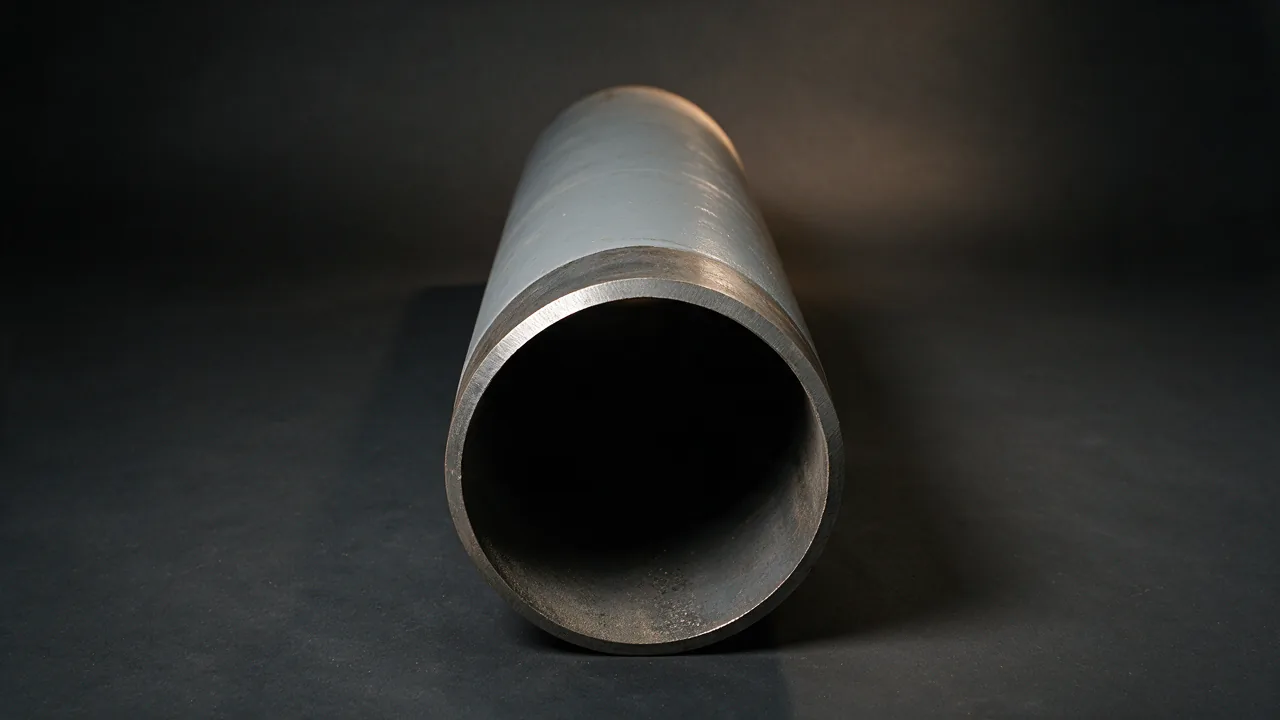
A transmission pipeline is specified by three things: the line pipe, the coating that keeps it from corroding in the ground, and the fittings that join the lengths. The pipe is bought to API 5L in grades from B up to X70 or X80, in the diameter the throughput calculation calls for, and the wall thickness follows from the design pressure under ASME B31.8 or B31.4.
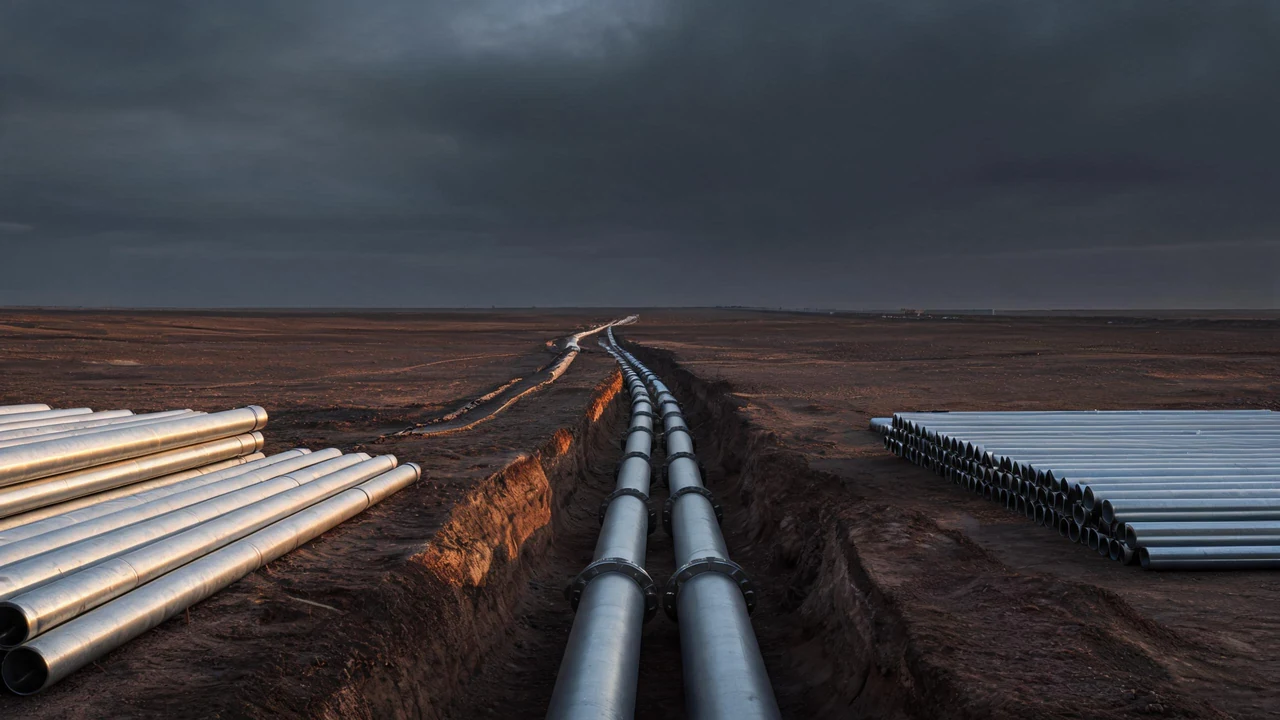
Mejor Steel is the export agent for the mills that make your material: one contract, one delivery date, and the mill named on the quotation. How we supply
We reply within one business day, Monday to Friday 09:00-18:00 CST. Or write to info@mejorsteel.com / WhatsApp.
Size and manufacturing route
Smaller gathering and distribution lines are usually seamless or ERW pipe up to about NPS 16. Larger transmission lines are welded: LSAW for long-distance, high-pressure mains where a single longitudinal seam gives the best dimensional control, and SSAW spiral welded pipe for large diameter lines where the helical seam distributes stress along the length. All three routes produce pipe that meets the same API 5L specification, so the choice is driven by diameter, wall thickness and price rather than by quality.
Grade follows the design calculation
Grade and wall thickness are decided together. For a given design pressure and diameter, a higher grade allows a thinner wall, which reduces the tonnage of steel and the cost of the line — and also reduces the impact toughness and the allowable strain. The usual grades in transmission service are B, X42, X52, X60, X65 and X70, with X80 used on large high-pressure lines.
API 5L PSL2 is the normal purchase specification for transmission pipe. It brings mandatory Charpy impact testing, a maximum carbon equivalent, and defined limits on yield and tensile strength that PSL1 does not require. Where the line crosses permafrost, seismic ground or deep water, the specification is extended further for fracture toughness and strain capacity.
The coating is chosen with the soil
External coating is not an afterthought; it is a design decision driven by soil resistivity, stray current, burial depth and the operating temperature. Three-layer polyethylene and three-layer polypropylene are the workhorses for buried lines, with fusion bonded epoxy preferred where the operating temperature is higher or where the coating has to resist mechanical damage during installation. Concrete weight coating is added where the line must be held down on a river or seabed crossing.
What is normally called out
| Service need | Product | Standard and grade |
|---|---|---|
| Small diameter trunk and gathering lines | API 5L Seamless Steel Pipe | API 5L PSL2, grades B to X70 |
| Distribution and medium-diameter lines | API 5L ERW Welded Steel Pipe | API 5L PSL2, up to about NPS 16 |
| High-pressure long-distance mains | API 5L LSAW Welded Steel Pipe | API 5L PSL2, grades B to X70 |
| Large diameter transmission | API 5L SSAW Spiral Welded Steel Pipe | API 5L PSL2, up to 60 inch |
| External corrosion protection | Anti-Corrosion Coated Steel Pipe | 3LPE, 3LPP, FBE to the coating specification |
| Line breaks, tees and take-offs | Butt Weld Tee | ASME B16.9, ASTM A234 WPB or to the line grade |
| Bends and direction changes | Butt Weld Elbow | ASME B16.9, or induction bends to the project specification |
| Reductions in line size | Butt Weld Reducer | ASME B16.9, concentric and eccentric |
| Valve and launcher station joints | Pipe Flanges | ASME B16.5 and B16.47, ASTM A105 |
Specifying a pipeline order
The purchase order is normally written against the line’s material specification rather than from a catalogue, so the enquiry has to carry: outside diameter, wall thickness, grade, product specification level, manufacturing route if it is restricted, coating type and thickness, length range, and the required documentation. Impact test temperature and the acceptance energy belong in the same paragraph as the grade, because a PSL2 pipe tested at 0 °C and one tested at −20 °C are different purchase items at different prices.
- Grade and wall thickness are one decision, not two. Fix the design pressure first and let both follow from the calculation.
- PSL2 is not a formality. If the specification calls for PSL2, the impact testing and carbon equivalent limits are mandatory and priced in.
- Coating and lining are separate. Internal flow efficiency coatings and external anti-corrosion coatings are quoted independently.
- Length range affects shipping. Random lengths and fixed lengths load differently into a container or onto a break-bulk vessel.
- Hydrostatic testing and NDT are usually to the line specification, and third-party inspection is arranged separately.
- Bends, tees and flanges should be ordered to match the line grade, not to the nearest standard fitting grade.
Frequently asked questions
Which grades are used for transmission pipelines?
Grades B, X42, X52, X60, X65 and X70 are the common range, with X80 on large high-pressure lines. The grade is chosen with the wall thickness to satisfy the design pressure, and higher grades allow a thinner wall for the same pressure.
What is the difference between LSAW and SSAW pipe?
LSAW is made from a plate formed longitudinally with one straight seam, which gives tight dimensional control and is preferred for high-pressure mains. SSAW is made from coil formed helically, which suits large diameters economically. Both are welded pipe to API 5L and both are used in transmission service.
Which coating should be used for a buried pipeline?
Three-layer polyethylene or polypropylene for most buried lines, fusion bonded epoxy where the operating temperature is higher or mechanical damage during installation is a risk. The choice is made from soil conditions, operating temperature and the cathodic protection design, not from preference.
Do you supply coated pipe or bare pipe?
Both. Pipe can be supplied bare for coating at a plant near the project, or coated and shipped complete, depending on where the coating capacity and the laydown yard are relative to the destination port.
Where to go next
- Steel pipe weight calculator – work out the weight of any size and wall thickness
- Pipe schedule chart – wall thickness for every schedule, carbon and stainless
- Request a quotation – send the specification, quantity and destination port
- API 5L X65 pipe – chemistry, mechanical properties and size range
- API 5L X52 pipe – a common mid-range transmission grade
- Oil and gas – how the segments of the industry differ in what they buy
- Construction and piling – pipe bought as a structural member, and the corrosion allowance
Need a price for a specific size and grade? Send the standard and grade, the size and wall thickness, the quantity and the destination port. We reply with availability and pricing.
Request a quotation