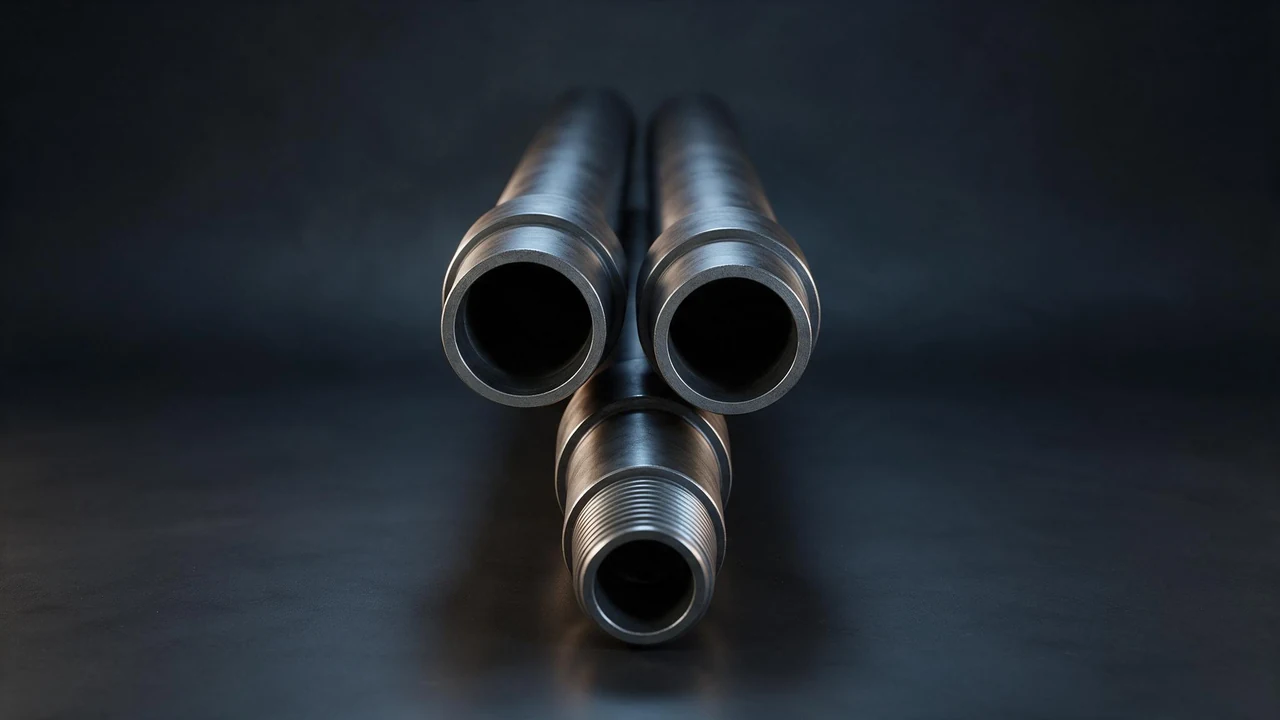
API 5CT N80 is an 80,000 psi (552 MPa) minimum yield casing grade supplied in two delivery conditions: N80-1, as-rolled or normalised with no impact requirement, and N80Q, quenched and tempered, with impact testing added by the purchase order where toughness has to be demonstrated. Both share the same yield range, 552 to 758 MPa, and the same 689 MPa (100,000 psi) minimum tensile strength. The delivery condition decides toughness, hardness and sour-service suitability.
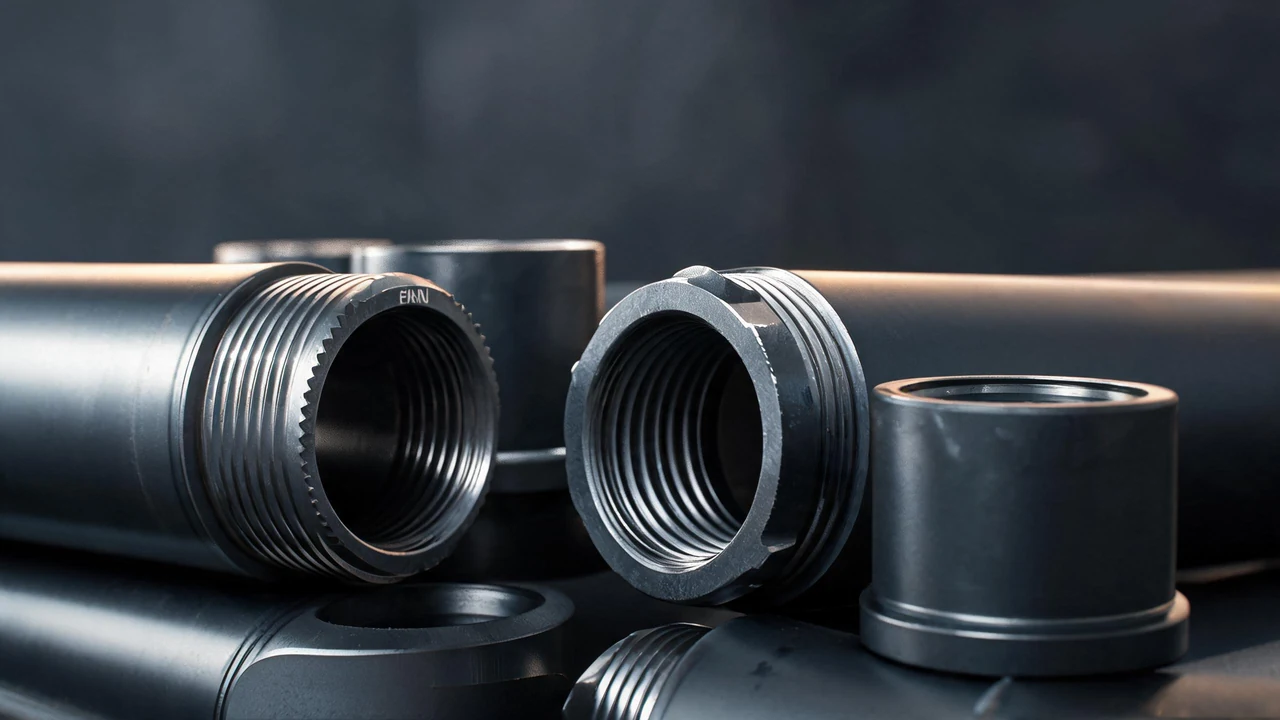
Download API 5CT N80 Casing data sheet (PDF) One-page summary of the supply range, chemistry, mechanical properties and inspection documents on this page. The standard is the governing document.
Mejor Steel is the export agent for the mills that make your material: one contract, one delivery date, and the mill named on the quotation. How we supply
We reply within one business day, Monday to Friday 09:00-18:00 CST. Or write to info@mejorsteel.com / WhatsApp.
Size range and specification
- Outside diameter 4-1/2 inch – 13-3/8 inch (114.3 – 339.7 mm), other API 5CT sizes on request
- Wall thickness 4.83 – 22.22 mm as a wall thickness, or by the API 5CT weight designation in lb/ft
- Length R1 4.88 – 7.62 m, R2 7.62 – 10.36 m, R3 10.36 – 14.63 m
- Ends STC, LTC, BTC, or premium connection
- Surface treatment Bare, varnish, phosphate, or as specified
- Delivery condition N80-1 as-rolled or normalised; N80Q quenched and tempered
- Manufacturing process Seamless or ERW (electric resistance welded)
- Heat treatment N80-1: as-rolled or normalised. N80Q: quenched and tempered
- Delivery standard API 5CT / ISO 11960, threads to API 5B
- Types Two delivery conditions of one grade – N80-1 and N80Q; the suffix is part of the order description and is not interchangeable
How this grade is supplied
- Inspection Inspected by the producing mill’s own inspection department, which is independent of production, against the delivery standard above. Third-party inspection — SGS, BV or TUV, or an inspector you send yourself — can be arranged at the mill or before shipment; give us the dates and the scope at the order stage.
- Certificate A mill test certificate to EN 10204 3.1 showing the heat number, the chemical composition and the mechanical results is standard on every order. EN 10204 3.2, countersigned by the inspector you nominate, is available on request.
- Documents with the goods The mill test certificate and the packing list travel with the shipment, and the heat number is traceable from cast through to the finished product.
- Packing Sea-worthy export packing: bundled by size with end protection, corrosion protection on request, stencilled with the size, grade and heat number.
- MOQ One bundle or one truckload; mixed sizes within a bundle accepted.
- Lead time Counted from order confirmation, not from the enquiry. Stock sizes 5–10 days; mill run or non-stock 3–5 weeks. The delivery window is fixed on the quotation.
- How we supply Sourced through partner mills; the producing mill is named on the quotation.
API 5CT N80 chemical composition (%)
| Element | Requirement | Element | Requirement |
|---|---|---|---|
| Phosphorus, P | 0.030 max | Carbon, C | not specified |
| Sulphur, S | 0.030 max | Manganese, Mn | not specified |
| Silicon, Si | not specified | Chromium, Cr | not specified |
| Nickel, Ni | not specified | Molybdenum, Mo | not specified |
N80 belongs to the same open-chemistry family as J55 and K55: the standard fixes the phosphorus and sulphur limits and leaves the rest of the steel to the manufacturer. The difference between N80-1 and N80Q is therefore not a composition difference at all – it is the heat treatment route. Because N80Q is quenched and tempered, and because impact testing and a hardness limit have to be brought in by the order where they matter, the mills that supply it normally use a low-alloy, fine-grain steel with sulphur held well below the maximum, but that is mill practice rather than a requirement of the standard. Where sour service is involved, the chemistry has to satisfy NACE MR0175 / ISO 15156 directly and the requirement belongs on the order.
Source: chemical composition requirements of API 5CT / ISO 11960. The standard is the governing document.
API 5CT N80 mechanical properties
| Grade | Yield strength | Tensile strength | Elongation | Impact test | Hardness |
|---|---|---|---|---|---|
| N80-1 (as-rolled or normalised) | 552 – 758 MPa (80,000 – 110,000 psi) | 689 MPa min (100,000 psi) | per the API 5CT formula | not required by the standard | not specified at delivery |
| N80Q (quenched and tempered) | 552 – 758 MPa (80,000 – 110,000 psi) | 689 MPa min (100,000 psi) | per the API 5CT formula | not imposed by the grade; required when PSL2/PSL3 or SR16 (A.9) is specified; minimum absorbed energy tabulated in the standard | not specified by API 5CT at delivery; 22 HRC max applies where NACE MR0175 / ISO 15156 is invoked |
The two rows differ only in the columns that are not strength: impact testing, heat treatment and hardness. N80 has a yield range rather than a floor, so material above 758 MPa is as much a deviation as material below 552 MPa, and elongation is calculated from the specimen cross-sectional area using the API 5CT formula rather than tabulated. API 5CT does not set a hardness limit for either delivery condition; the 22 HRC figure quoted for the quenched and tempered condition comes from NACE MR0175 / ISO 15156 and only applies when sour service is specified and the requirement is written into the order. Where impact toughness is required, the acceptance energy depends on the grade and on the specimen size, so it should be read from the standard together with the test report rather than quoted from memory.
Source: tensile requirements of API 5CT / ISO 11960. The standard is the governing document.
API 5CT N80-1 and N80Q compared
| Requirement | N80-1 | N80Q |
|---|---|---|
| Delivery condition | As-rolled or normalised; not required to be quenched and tempered | Quenched and tempered |
| Minimum yield strength | 552 MPa (80,000 psi) | 552 MPa (80,000 psi) |
| Maximum yield strength | 758 MPa (110,000 psi) | 758 MPa (110,000 psi) |
| Minimum tensile strength | 689 MPa (100,000 psi) | 689 MPa (100,000 psi) |
| Impact test | Not required by the standard | Not imposed by the grade; required when PSL2/PSL3 or SR16 (A.9) is specified |
| Hardness | Not specified by API 5CT at delivery | Not specified by API 5CT at delivery; 22 HRC (250 HV) where NACE MR0175 / ISO 15156 is invoked |
| Microstructure as supplied | Ferrite and pearlite from the as-rolled or normalised condition | Tempered martensite or bainite from the quench and temper |
| Sour service | Normally not accepted; hardness and toughness are not controlled | The delivery condition to consider, provided the hardness limit is written into the order and verified on the certificate |
| Relative cost | The lower-cost condition, with fewer mill test requirements | The higher-cost condition, used for deeper and more demanding strings |
The two conditions are the same grade number on either side of a heat treatment decision. N80-1 is allowed to be delivered as-rolled or normalised, which produces a softer, coarser structure with no guaranteed toughness; nothing in the standard stops an as-rolled N80-1 heat from coming out harder than the 22 HRC that sour service allows, and no impact test will catch it. N80Q is quenched and tempered, which gives a tempered structure of controlled hardness, and the order can add impact testing where the toughness has to be measured. The practical rule for a buyer is that the two are not interchangeable on a certificate: an order that needs N80Q properties is not satisfied by N80-1 pipe that happens to meet the same tensile and yield figures.
What Is API 5CT N80 Casing?
API 5CT N80 is a carbon steel casing grade with a minimum yield strength of 80,000 psi (552 MPa), a maximum yield strength of 110,000 psi (758 MPa) and a minimum tensile strength of 100,000 psi (689 MPa). It sits above K55 and below L80 and P110 in strength, and it is the first grade in the API 5CT list that is offered in two distinct forms: N80-1, delivered as-rolled or normalised, and N80Q, delivered quenched and tempered. The N80 grade name states the strength class; the suffix states the heat treatment, and on an OCTG order the suffix is not optional, because it is what tells the mill and the buyer which set of toughness and hardness expectations apply.
N80-1 and N80Q: One Grade, Two Delivery Conditions
N80-1 is permitted to be supplied in the as-rolled or normalised condition. It has no impact test requirement and no hardness limit, so its toughness depends on the steel the mill happens to use and on the rolling or normalising practice – not on a measured acceptance value. N80Q must be quenched and tempered, which means the pipe is austenitised, rapidly cooled, and then tempered to a controlled strength level, producing tempered martensite or bainite instead of ferrite and pearlite; impact testing is not imposed by the grade and is added through the purchase order. Both conditions carry exactly the same yield range and the same minimum tensile strength, so strength alone will never tell a buyer which one was delivered. The delivery condition has its own page on this site – see the N80Q casing page for the quenched and tempered grade in detail.
Why N80Q Is the Sour-Service Option and N80-1 Is Not
Sulphide stress cracking is a hardness-driven failure. NACE MR0175 / ISO 15156 limits carbon and low-alloy steels of this strength level to a maximum hardness of 22 HRC (250 HV), and it is that limit rather than the grade name that decides acceptability. N80Q can be made to satisfy it, because a quench and temper produces a uniform tempered structure whose hardness is controllable and measurable, and because the same heat is impact tested when the order requires it. N80-1 is a different proposition: as-rolled or normalised, unchecked for hardness and untested for toughness, it can sit above 22 HRC without anything on the certificate showing it. The consequence is that sour service needs N80Q with the hardness limit written into the order and the result verified on the certificate – not an N80-1 string with an assumption attached.
Where N80 Casing Is Used
N80 is specified for intermediate and production casing in medium-depth wells, for drilling liners, for production casing in wells where K55 runs out of collapse or burst capacity, and for wells whose loads sit between the K55 and P110 cases. In US trade sizes it is ordered most often as 4 1/2 in (114.3 mm), 5 1/2 in (139.7 mm), 7 in (177.8 mm), 9 5/8 in (244.5 mm) and 13 3/8 in (339.7 mm) casing.
N80 as tubing: the same grade in the production string
N80 is ordered as tubing as well as casing. The grade is the same, and so are the chemistry and the mechanical requirements; what changes is the string the pipe belongs to, and the dimensions that follow from it. Casing lines the wellbore and is cemented in place. Tubing is the inner string that carries the production, and it is the smaller bore of the two.
Tubing is ordered in the API 5CT tubing range rather than the casing range: outside diameter from 1.050 in to 4-1/2 in (26.7 mm to 114.3 mm), quoted most often at 2-3/8 in, 2-7/8 in and 3-1/2 in, with R1, R2 or R3 lengths and EUE, NUE or a premium connection. The dimension table for that range is on the L80 tubing page, which shares it; the casing range is in the table at the top of this page.
N80 tubing is specified for production tubing in medium-depth sweet wells, and as the tubing string where the loads are above what J55 or K55 tubing carries. Where the well is sour the tubing string moves to L80 or to 13Cr, and where it is deeper and more heavily loaded, to P110. The grade decision for tubing is the same decision as for casing, taken on the same well conditions.
Worth settling on the enquiry: tubing and casing are quoted from different dimension tables, so an enquiry that gives only a size and a grade can be read either way. State tubing or casing, and give the weight or wall as well as the size.
Where the well is sweet, N80-1 is enough and costs less; where it is sour, where the design temperature is low, or where the operator simply wants a measured toughness on the record, the string is ordered as N80Q.Choosing Between N80, L80 and P110
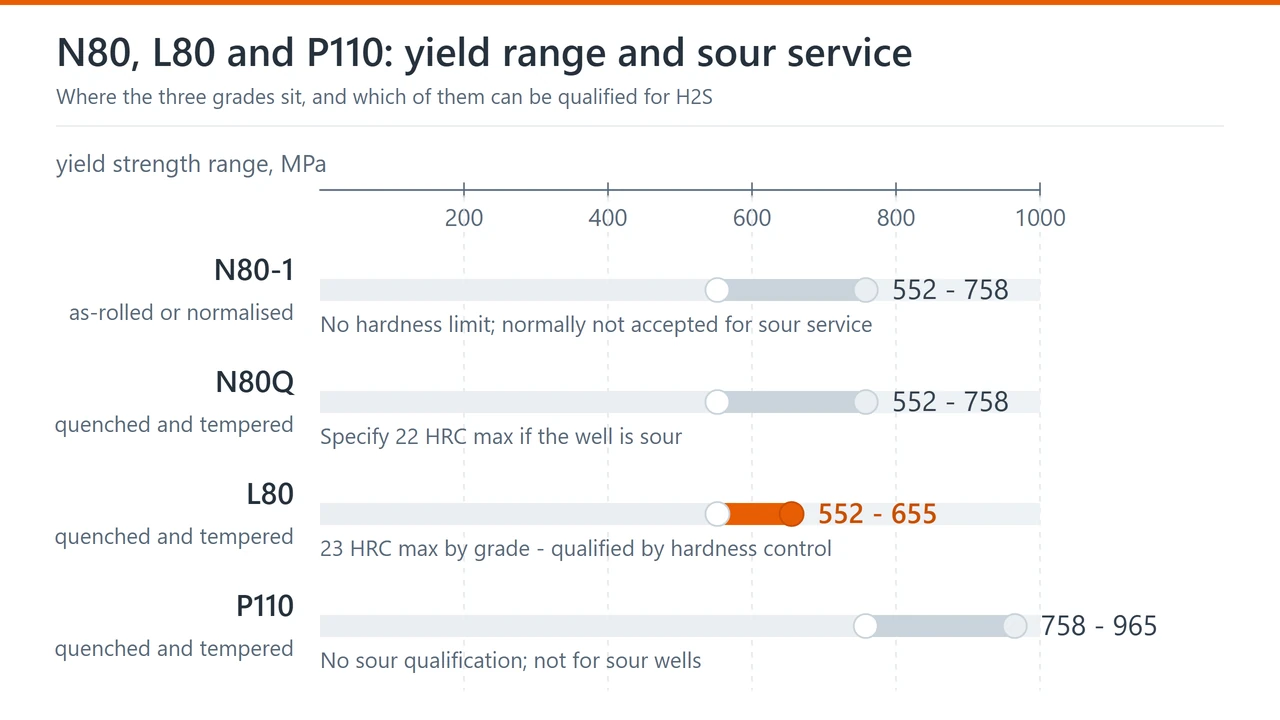
L80 is a quenched and tempered carbon or low-alloy grade in the same 80,000 to 95,000 psi yield band as N80Q, but it carries a 23 HRC maximum hardness as a requirement of the grade itself rather than as an added order condition, which is why many sour-service specifications name L80 when N80Q would otherwise be close to the line. P110 goes a step further in strength, at 110,000 psi minimum yield, and it is also quenched and tempered, with impact testing a matter for the order rather than the grade; it is chosen when the collapse, burst or tensile load cannot be met in N80 within a practical wall. Moving up the ladder buys load capacity and pays for it in material cost and in sensitivity to handling damage, so each string is normally designed from the load cases rather than from a preference for a higher grade.
The yield ranges of the three grades, and the hardness lines that decide sour service, are shown below.
Grade selection at a glance
| Grade | Min yield | Hardness limit | Sour service | Typical role |
|---|---|---|---|---|
| K55 / J55 | 379 MPa (55,000 psi) | None | No | Shallow surface and intermediate casing |
| N80-1 | 552 MPa (80,000 psi) | None | No | Medium-depth sweet wells, lower cost |
| N80Q | 552 MPa (80,000 psi) | None from API 5CT | Only if 22 HRC is written into the order | Medium-depth wells needing measured toughness |
| L80 | 552 MPa (80,000 psi) | 23 HRC | Yes | Sour-service equivalent in the same strength band |
| P110 | 758 MPa (110,000 psi) | None | No | Deep, high-collapse and high-burst strings |
Relative cost and depth ranges are directional and vary with market and mill; confirm against the project’s well design before quoting.
Threads, Couplings and Documentation
N80 casing is threaded to API 5B and supplied with STC, LTC or BTC couplings as standard, with premium connections ordered for gas-tightness, higher torque or where the string will be run in a well with a history of connection problems. The coupling is a separate API 5CT item and must match the pipe grade and thread form; where the connection is the limiting item, a coupling in a higher grade than the pipe may be specified. Documentation matters more on N80Q than on N80-1, because the delivery condition is the whole point of the order: the mill certificate should show the heat treatment route, the yield and tensile results inside the 552 to 758 MPa window against the 689 MPa minimum, the impact results, and the hardness result where the order calls for one.
Inspection and test frequency
The test list matters as much as the test values. The table below is an indicative inspection and test plan for N80 casing; the exact frequency is fixed by the mill’s procedure and the purchase order.
| Test / inspection | N80-1 | N80Q |
|---|---|---|
| Tensile test | Per heat / per lot | Per heat / per lot |
| Flattening test | Per pipe or per sample per the order | Per pipe or per sample per the order |
| Hydrostatic test | Each length | Each length |
| Drift test | Each length | Each length |
| Charpy V-notch impact | Not required by the standard | Required when PSL2/PSL3 or SR16 (A.9) is specified; frequency and acceptance per API 5CT |
| Hardness test | Not mandatory | On request; mandatory only where a sour-service hardness limit is written into the order |
| NDE (UT/EM) | Optional unless specified | Optional unless specified |
| MTC | EN 10204 3.1 standard; 3.2 on request | EN 10204 3.1 standard; 3.2 on request |
Connections at a glance
| Connection | Thread form | Typical joint efficiency | Typical use |
|---|---|---|---|
| STC — short thread coupling | API 8-round, short | About 60% | Surface casing, low-pressure service |
| LTC — long thread coupling | API 8-round, long | About 70% | Intermediate casing, moderate pressure |
| BTC — buttress thread coupling | Buttress, trapezoidal | About 95% | Higher collapse and burst service |
| Premium connection | Supplier-specific, often metal-to-metal | Supplier-rated | Gas-tight, high-torque, directional and HPHT wells |
The efficiencies are typical directional values, not a substitute for the rating of the exact connection, size and weight. For any gas or high-pressure string, read the connection rating from the supplier’s data sheet rather than from the thread name alone.
Impact testing and SR16
API 5CT does not make Charpy impact testing mandatory for N80. The requirement is brought in through the purchase order, usually under API 5CT supplementary requirement SR16. SR16 fixes the test temperature and the minimum absorbed energy so the mill knows what it is being measured against. Without it, an N80 mill certificate may have no impact result at all, which is why the test has to be written into the order before production starts.
N80, L80 and P110: which grade for the order
| Grade | Yield range | Hardness | Sour service | Typical role |
|---|---|---|---|---|
| N80-1 | 552 – 758 MPa | No hardness limit | Not normally accepted | General medium-depth casing |
| N80Q | 552 – 758 MPa | No API hardness limit; specify 22 HRC max if sour | Possible with order-controlled hardness | Deeper or higher-pressure casing |
| L80 | 552 – 655 MPa | 23 HRC max by grade | Qualified by hardness control | Sour-service tubing and casing |
| P110 | 758 – 965 MPa | No general sour qualification | Not for sour wells | High-collapse, high-pressure casing |
Source: API 5CT mechanical property and supplementary requirements, plus NACE MR0175 / ISO 15156 hardness limits where sour service is specified.
Typical applications
- Intermediate and production casing in medium-depth wells
- Drilling liners
- Production casing where K55 runs out of collapse or burst capacity
- Sour-service casing where a hardness limit can be met
- Wells with a low design temperature where a measured toughness is wanted
Standards covered
Frequently asked questions
What is the difference between N80-1 and N80Q?
Only the delivery condition. N80-1 may be supplied as-rolled or normalised, with no impact test requirement and no hardness limit. N80Q must be quenched and tempered; impact testing is not imposed by the grade and is brought in by the purchase order (PSL2/PSL3 or SR16). Both have the same yield range, 552 to 758 MPa, and the same minimum tensile strength of 689 MPa, so the two cannot be told apart by strength; the certificate has to state the delivery condition, and on a sour-service order only N80Q with a verified hardness result should be accepted.
Can N80 casing be used in sour service?
Only N80Q, and only when the delivered material meets the hardness limit in NACE MR0175 / ISO 15156, which is 22 HRC (250 HV) – for carbon and low-alloy steels at this strength level. API 5CT does not set that limit, so it has to be written into the purchase order and confirmed on the mill certificate. N80-1 is normally not accepted: it is supplied as-rolled or normalised without a hardness limit and without an impact test, so there is nothing on the certificate to show it meets the requirement.
Does N80Q have a hardness limit in API 5CT?
API 5CT does not impose a hardness limit on N80Q at delivery. The 22 HRC figure that buyers quote for N80Q comes from NACE MR0175 / ISO 15156 and applies only when sour service is specified. That is why a sour-service order has to carry the hardness requirement and the hardness test explicitly: the mill is not obliged to check hardness, or to report it, unless the order asks for it.
Is N80 the same as L80?
No. They overlap in strength – L80 covers 80,000 to 95,000 psi minimum yield and N80Q covers 80,000 to 110,000 psi – but they are separate grades with separate requirements. L80 carries a 23 HRC maximum hardness as part of the grade itself and is quenched and tempered by definition, while N80Q has no hardness requirement in the standard and relies on the order to impose one. N80-1, the as-rolled or normalised condition, has no equivalent in the L80 grade at all.
Where to go next
- OCTG: Casing and Tubing – which string, grade, connection and documents the well needs
- API 5CT N80Q Casing – quenched and tempered well casing
- API 5CT J55 Casing
- API 5CT L80 Tubing – sour-service tubing with controlled hardness
- Oil & Gas – the four products in the oil and gas chain
- Sour Service – what changes when H2S is present
- Get a Quote – send the grade, size, quantity and destination port
- API 5CT Casing Pipe – API 5CT well casing
- API 5CT Casing Coupling – casing couplings to API 5CT
- Premium Connection Casing and Tubing – gas-tight premium connections
- N80-1 vs N80Q – delivery condition, toughness, and where impact testing actually comes from
Looking for a price on a specific item? We need the standard and grade, the size and wall thickness, the quantity, and the destination port. With those four we can confirm availability and give you a price.
Request a quotation