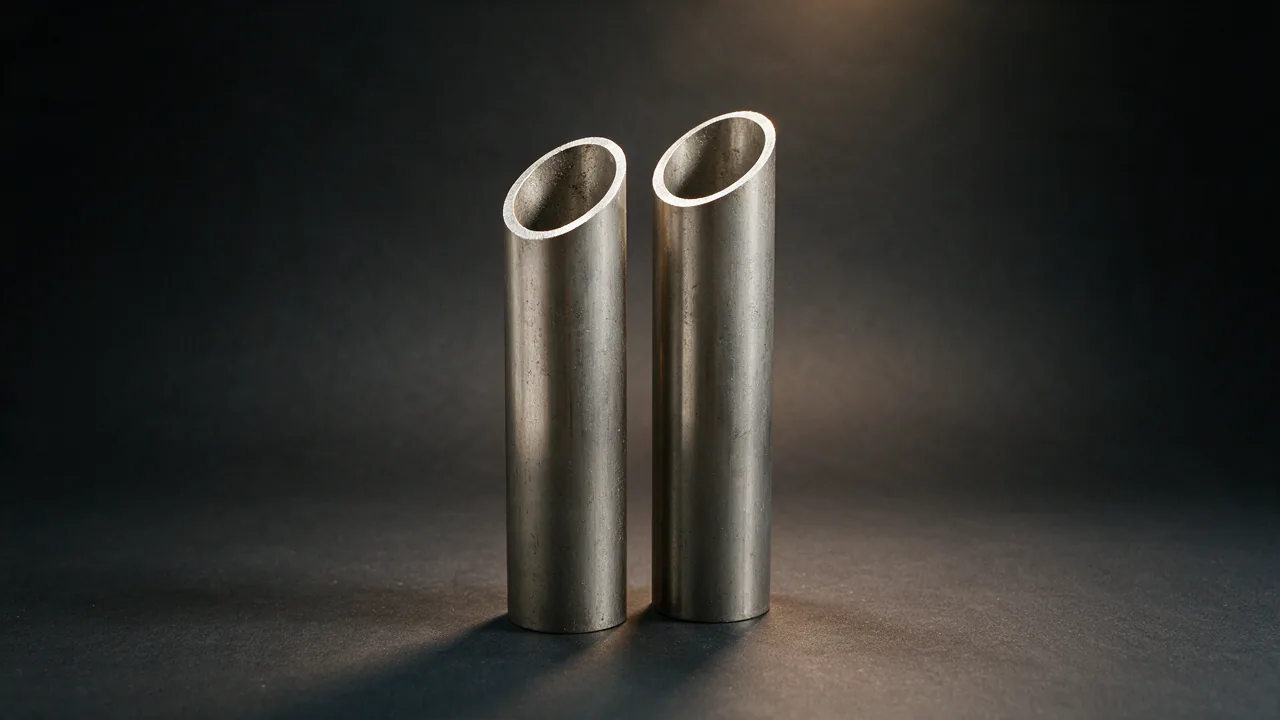
ASTM A312 TP316 is the molybdenum-bearing austenitic stainless steel pipe grade, with 16 to 18 percent chromium, 10 to 14 percent nickel and 2 to 3 percent molybdenum, a minimum yield strength of 205 MPa and a minimum tensile strength of 515 MPa. The molybdenum raises its resistance to pitting and crevice corrosion in chloride-bearing service, which is the reason to specify TP316 instead of the otherwise comparable TP304.
Download ASTM A312 TP316 Pipe data sheet (PDF) One-page summary of the supply range, chemistry, mechanical properties and inspection documents on this page. The standard is the governing document.
Mejor Steel is the export agent for the mills that make your material: one contract, one delivery date, and the mill named on the quotation. How we supply
We reply within one business day, Monday to Friday 09:00-18:00 CST. Or write to info@mejorsteel.com / WhatsApp.
Size range and specification
- Outside diameter 1/8 inch – 24 inch (10.3 – 610 mm)
- Wall thickness SCH 5S – SCH 80S, or by wall thickness
- Length SRL 5.8 m, DRL 11.8 m, or fixed length
- Ends Plain end, beveled end, threaded
- Surface treatment Pickled, annealed and pickled, bright annealed, polished
- Manufacturing process Seamless, welded, or heavily cold worked
- Heat treatment Solution annealed
- Delivery standard ASTM A312 / ASME SA312, dimensions to ASME B36.19M for the S schedules
- Delivery condition Annealed
How this grade is supplied
- Inspection Inspected by the producing mill’s own inspection department, which is independent of production, against the delivery standard above. Third-party inspection — SGS, BV or TUV, or an inspector you send yourself — can be arranged at the mill or before shipment; give us the dates and the scope at the order stage.
- Certificate A mill test certificate to EN 10204 3.1 showing the heat number, the chemical composition and the mechanical results is standard on every order. EN 10204 3.2, countersigned by the inspector you nominate, is available on request.
- Documents with the goods The mill test certificate and the packing list travel with the shipment, and the heat number is traceable from cast through to the finished product.
- Packing Sea-worthy export packing: bundled by size with end protection, corrosion protection on request, stencilled with the size, grade and heat number.
- MOQ One bundle or one truckload; mixed sizes within a bundle accepted.
- Lead time Counted from order confirmation, not from the enquiry. Stock sizes 5–10 days; mill run or non-stock 3–5 weeks. The delivery window is fixed on the quotation.
- How we supply Sourced through partner mills; the producing mill is named on the quotation.
ASTM A312 TP316 chemical composition (%)
| Element | Range | Element | Range |
|---|---|---|---|
| Carbon, C | 0.08 max | Nickel, Ni | 10.0 – 14.0 |
| Manganese, Mn | 2.00 max | Phosphorus, P | 0.045 max |
| Silicon, Si | 0.75 max | Sulphur, S | 0.030 max |
| Chromium, Cr | 16.0 – 18.0 | Molybdenum, Mo | 2.00 – 3.00 |
Compared with TP304 the chromium range is lower but the nickel range is higher and 2 to 3 percent molybdenum is added; it is the molybdenum that does the work in chloride service, supported by the higher nickel. TP316L is the same composition with carbon capped at 0.035 percent, used where welded joints cannot be solution annealed afterwards, and it is specified at lower minimum strength values than TP316.
Source: chemical composition requirements of ASTM A312 / ASME SA312. The standard is the governing document.
ASTM A312 TP316 mechanical properties
| Grade | Tensile strength | Yield strength | Elongation | Hardness |
|---|---|---|---|---|
| TP316 (ASTM A312) | 515 MPa min (75,000 psi) | 205 MPa min (30,000 psi) | 35% min | not specified for the grade |
| TP316L (for reference) | 485 MPa min (70,000 psi) | 170 MPa min (25,000 psi) | 35% min | not specified for the grade |
TP316 and TP304 share the same specified minimum strength, so the choice between them is a corrosion decision rather than a strength decision. Yield strength is the 0.2 percent offset value, as it is for all austenitic stainless steels. The grade itself is not specified by hardness; where sour service or a specific code applies, that limit governs and belongs on the order.
Source: tensile requirements of ASTM A312 / ASME SA312. The standard is the governing document.
What Is ASTM A312 TP316 Pipe?
ASTM A312 TP316 is austenitic stainless steel pipe to the 316 composition – 16 to 18 percent chromium, 10 to 14 percent nickel and 2 to 3 percent molybdenum – with a minimum yield strength of 205 MPa and a minimum tensile strength of 515 MPa. A312 covers seamless, welded and heavily cold worked pipe, all furnished annealed, so the grade name does not by itself say which manufacturing route was used. TP316 is the grade specified when the pipe has to resist chlorides, and it is otherwise interchangeable in strength and dimensions with TP304.
What the Molybdenum Does
Pitting and crevice corrosion in stainless steel begin where the passive film breaks down, and chloride ions are what break it. Molybdenum in solid solution makes the film more resistant to that breakdown, which raises the chloride concentration and the temperature the steel can tolerate before pitting starts. That is why TP316 is chosen over TP304 for chloride-bearing water, coastal atmospheres, and process streams containing chlorides, and why the extra cost of the molybdenum is accepted. It is a matter of degree, not of kind: TP316 is not immune to chlorides, and at higher chloride levels or higher temperatures the answer moves to a duplex or a higher-alloy austenitic grade.
TP316, TP316L and TP317L Compared
TP316 has up to 0.08 percent carbon; TP316L caps carbon at 0.035 percent to limit carbide precipitation at weld joints, at the cost of lower specified minimum strength. TP317L goes further and raises both molybdenum, to about 3 to 4 percent, and nickel, which increases resistance to pitting and to crevice corrosion again, and is specified for more aggressive chloride or acid service. The same progression applies as for the 304 family: choose the L grade where welded joints cannot be re-annealed, and step up the alloy content only when the environment actually requires it.
Where TP316 Pipe Is Used
TP316 is used in the same industries as TP304 but in the harder environments within them: chemical process piping carrying chlorides or dilute acids, offshore and coastal piping exposed to salt, pulp and paper bleaching lines, pharmaceutical and food plants using chloride-containing cleaning agents, heat exchanger and condenser tubing in cooling water service, and marine and desalination-related piping. It is also common in medical and high-purity systems where the molybdenum addition reduces the risk of localized corrosion during cleaning and sterilization.
Sizes, Condition and Inspection
TP316 is supplied from about 1/8 inch to 24 inch outside diameter, with dimensions to ASME B36.19M where a stainless S schedule is called for. Pipe is furnished solution annealed, then pickled or bright annealed, and welded pipe may be ordered with or without the internal weld bead removed. Documentation normally includes the mill certificate with chemistry and tensile results against the heat number; where specified, the order also calls for intergranular corrosion testing and for hydrostatic or eddy current testing of welded pipe, and for a positive material identification check on receipt.
Typical applications
- Chemical process piping carrying chlorides or dilute acids
- Offshore and coastal piping exposed to salt
- Pulp, paper and bleaching lines
- Pharmaceutical and food plants using chloride-bearing cleaning agents
- Heat exchanger and condenser tubing in cooling water service
Standards covered
Frequently asked questions
What is the difference between TP304 and TP316?
TP316 is TP304 with molybdenum: it contains 2 to 3 percent molybdenum, less chromium (16 to 18 percent against 18 to 20) and more nickel (10 to 14 percent against 8 to 11). Both have the same minimum yield and tensile strengths and the same dimensions. The molybdenum makes TP316 markedly more resistant to pitting and crevice corrosion in chloride-bearing service, which is the only reason to pay for it; in chloride-free service TP304 performs just as well.
Is TP316 resistant to sea water?
TP316 is more resistant than TP304 but is not a sea water alloy. In quiet, unaerated sea water it performs acceptably in many services, but in flowing or aerated sea water, in crevices, and at higher temperatures it is still liable to pitting and crevice corrosion, and it is not immune to chloride stress corrosion cracking. Sea water and other high-chloride duties are normally covered by a duplex grade or a higher-alloy austenitic grade, and the selection belongs in the piping specification rather than in the material enquiry.
Should TP316 or TP316L be ordered?
Order TP316L where the pipe will be welded and the joint cannot be solution annealed afterwards, because the lower carbon reduces the risk of intergranular corrosion at the weld. Order TP316 where the higher specified minimum strength is wanted, or where the pipe is not welded in a way that leaves it sensitized. Many projects accept either and put the choice in the piping specification; what matters is that the order and the mill certificate state the same grade.
Where to go next
- Stainless Steel Pipe – grades, standards and how the order is fixed
- ASTM A312 Stainless Steel Pipe – seamless and welded austenitic stainless pipe
- ASTM A312 TP304 Pipe – the general-purpose austenitic stainless pipe grade
- Stainless Steel Butt Weld Fittings – stainless butt weld fittings to ASME B16.9
- Boiler & Heat Exchanger Tube – tube specified by outside diameter and wall
- Pipe Schedule Chart – wall thickness for every schedule
- Steel Pipe Standards & Grades – every grade page in this section
- Get a Quote – send the grade, size, quantity and destination port
- ASTM A269 Tubing – seamless and welded stainless tubing ordered by OD and wall
- ASTM A790 Duplex Pipe – the higher-strength duplex stainless pipe for chloride service
Four details and we can quote. The grade or the standard the material has to meet, the size and wall thickness, the tonnage, and the destination port. Send them together and we answer with availability and pricing.
Request a quotation