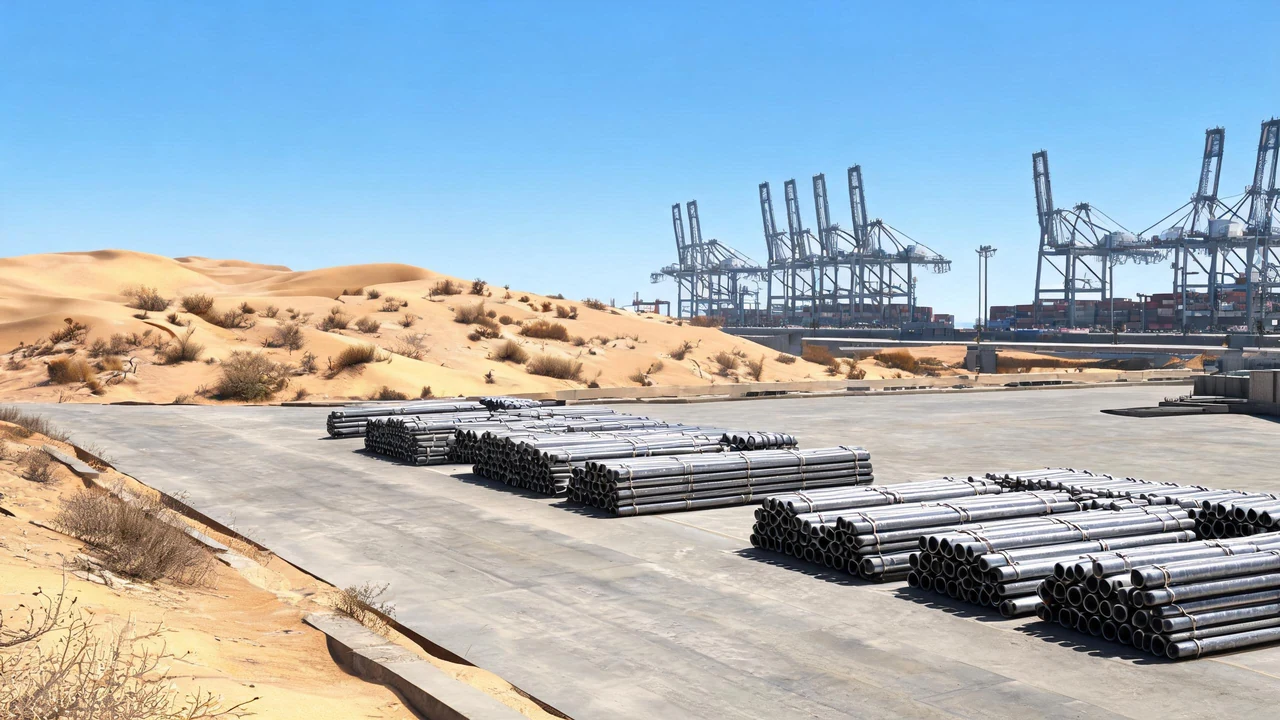
A steel pipe consignment into Saudi Arabia is decided before it ships: which technical regulation covers the pipe’s end use, and whether the two Saber certificates can be obtained in the right order. This page sets out that sequence, what we provide as the supplier, and what only the importer can do.
Mejor Steel is the export agent for the mills that make your material: one contract, one delivery date, and the mill named on the quotation. How we supply
We reply within one business day, Monday to Friday 09:00-18:00 CST. Or write to info@mejorsteel.com / WhatsApp.
Which regulation applies depends on the end use
SASO, the Saudi Standards, Metrology and Quality Organization, publishes technical regulations by product category, and pipes are covered where they are used in the networks those regulations govern. The category matters more than the material: the same API 5L pipe can fall inside the regulated scope when it is installed in a water, electricity or gas network, and outside it when it is bought for general structural work.
| End use | What normally applies | Who files it |
|---|---|---|
| Pipes for water, electricity and gas networks | The SASO technical regulation for that category, plus Saber registration | The importer, or its authorised representative in Saudi Arabia |
| Line pipe and OCTG for oil and gas projects | The project owner’s specification and approval process, with mill certification to the order; conformity requirements where the end use is regulated | Project QA together with the importer |
| Structural, piling and general fabrication | Depends on the end use and on whether that category is regulated at the time | Importer, confirmed with the conformity body |
The scope of a technical regulation changes, and it is published rather than negotiated. Confirm the current text against SASO’s own regulations before the order is priced, not after the pipe is on the water.
Saber: two certificates, and the order they come in
Saber is the platform through which conformity is registered. Two different certificates are involved, and they are not interchangeable.
| Certificate | What it covers | When it is obtained | Typical applicant |
|---|---|---|---|
| Product conformity certificate | The product, as a model or family, registered in the platform | Before shipment, and renewed while it is valid | The importer or the manufacturer’s authorised representative |
| Shipment conformity certificate | One specific consignment, against the registered product and the shipping documents | Per shipment, before arrival | The importer |
The order is the part that catches people out. A shipment certificate cannot be issued against a product that has no registered product certificate, so an importer who starts the process after booking the cargo is buying time it does not have. The practical sequence is: confirm the regulated scope, register the product, then raise the shipment certificate against the invoice, packing list and bill of lading.
Who issues the certificate, and what the platform is not
Saber is the platform where the product and the consignment are registered; it is not the body that assesses the product or issues the certificate. The certificate is issued by a conformity body approved for the technical regulation that covers the end use. That distinction decides who has to be chased when a certificate is delayed — the importer, together with the body it appointed, and not the supplier.
- The importer (or the manufacturer’s authorised representative) registers the product and applies for the certificates.
- An approved conformity body assesses the documentation and issues the product certificate; the shipment certificate follows for each consignment.
- We provide what the assessment is based on: mill test certificates to the standard on the order, chemistry and mechanical results traceable to the heat numbers on the bundles, dimensional and pressure test records, and the packing list and marking that match them.
- What no supplier can do on your behalf: register a product in your name, or issue the certificate itself.
The platform is the Saudi government’s Saber service; the standards body behind the technical regulations is SASO, the Saudi Standards, Metrology and Quality Organization. Both are named here so the sequence can be checked against the source rather than against a broker’s summary.
What we provide, and what only you can do
Being clear about this split saves the worst kind of delay – the one caused by both sides assuming the other had filed something.
We provide: the mill test certificates to the standard on the order (EN 10204 3.1, or 3.2 where a third party issues it), chemistry and mechanical test results traceable to the heat numbers on the bundles, dimensional and hydrostatic or non-destructive test records to the specification, the packing list and the marking that matches the certificates, and – where the project requires it – documents prepared with an approved conformity body for the product certificate.
Only the importer can do: hold the registration in Saber and file the shipment certificate, clear the goods in its own name, and confirm the classification and the duty treatment with its customs broker. A supplier cannot clear Saudi customs on the importer’s behalf, and any supplier who says otherwise is describing something it cannot deliver.
Where this goes wrong, and what it costs
- The product certificate covers a different model than the one shipped. The mismatch is found at the platform, not at the port, and the consignment waits while the certificate is re-issued.
- The shipment certificate is applied for after arrival. Storage and demurrage at the port accumulate daily, and the buyer pays them, not the supplier.
- The mill certificate is treated as a substitute for conformity. A mill certificate proves what the mill tested; it does not register a product in Saber, and it does not satisfy a regulated end use on its own.
- The mill or the grade changes mid-project. The registered product has to be updated; a project that switches supplier without updating the certificate clears one shipment and blocks the next.
- Nobody checked whether the end use is regulated before quoting. This is the most expensive version, because it is discovered after the pipe is made and shipped.
Duties and trade measures
Saudi Arabia’s trade remedies – anti-dumping, countervailing and safeguard investigations – are handled by GAFT, the General Authority for Foreign Trade, which publishes its investigation notices and circulars, including the notices that impose or extend measures. Steel pipe has been the subject of measures in the past, so the position for a specific product and origin has to be checked against those notices for the date of import rather than assumed from an earlier deal.
The applicable duty, the VAT position and whether a measure currently applies to your classification are confirmed by the importer’s customs broker against the rules in force. We supply documents and product data; the importer’s broker confirms the treatment.
What to send with the enquiry
- Grade and standard, with the specification edition the project works to.
- Outside diameter, wall thickness, length and end preparation.
- End use, because that is what decides whether conformity applies: water or gas network, oil and gas project, or structural work.
- Quantity, and whether the order is one shipment or several – the certificate sequence repeats per shipment.
- Certificates required: mill certificate only, or EN 10204 3.2, or a conformity document prepared with an approved body.
- Whether you already hold a registration in Saber, and for which product.
- Delivery term and destination port in Saudi Arabia.
Frequently asked questions
Does every steel pipe shipment to Saudi Arabia need a SASO or Saber certificate?
No. It depends on the end use. Where the pipe goes into a network covered by a technical regulation, conformity applies and the product has to be registered before the shipment certificate can be raised. Where it goes into an unregulated use, the requirement is normally the project specification and the mill certification. That is why we ask for the end use with the enquiry rather than assuming from the grade.
Can the supplier obtain the Saber certificates for us?
We can prepare the documents that support a product certificate with an approved conformity body, and we provide the test records and markings the file depends on. Registration and the shipment certificate sit with the importer, because they are held in the importer’s name and tie to its customs file. Where an importer does not yet have a presence in Saudi Arabia, it appoints a representative – that is a commercial arrangement the importer makes, not something a supplier can do on its behalf.
Is a mill test certificate enough for customs?
For an unregulated product, the mill certificate plus the standard shipping documents is normally the file. For a regulated product it is not enough on its own: the conformity route has to be completed as well. The two answer different questions – the mill certificate says what was tested, the conformity certificate says the product is registered for that use.
Where to go next
- API 5L line pipe for Saudi Arabia – grades, wall selection and delivery into Saudi ports.
- Mill test certificate – how to specify it, what it must show, and when it is not enough.
- EN 10204 3.1 vs 3.2 – the two certificate types compared.
- Third party inspection – the inspection nodes and who attends them.
- Get a quote – send the specification, the end use and the destination port.
Shipping pipe into Saudi Arabia? Send the grade and standard, the size and wall, the end use, the quantity and the destination port. We confirm the documents, the certificate type and the conformity route before the order is released.
Request a quotation