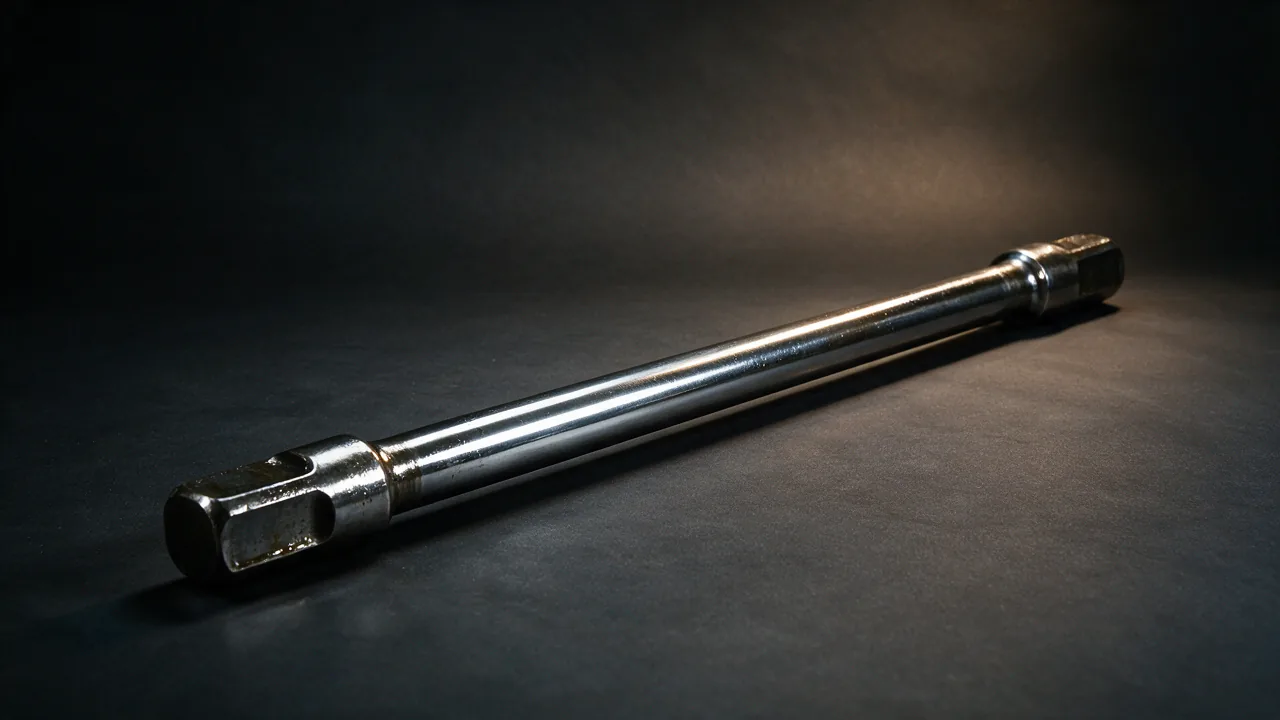
Polished rods for beam pumping units, machined and ground to a mirror finish, in sizes from 3/4 inch to 1-1/2 inch, with a top and bottom end connection.
- Standard: API 11B, API 11BR, NACE MR0175
- Grades: C, D, K, KD, HL, HY
- Certificate: EN 10204 3.1 with every order, 3.2 on request
Mejor Steel is the export agent for the mills that make your material: one contract, one delivery date, and the mill named on the quotation. How we supply
We reply within one business day, Monday to Friday 09:00-18:00 CST. Or write to info@mejorsteel.com / WhatsApp.
Specifications
| Outer diameter | 3/4", 7/8", 1", 1-1/8", 1-1/4", 1-1/2" |
|---|---|
| Length | 8 ft to 26 ft, in 2 ft increments |
| Ends | Top end: polished rod coupling or polished rod clamp area; bottom end: standard sucker rod pin |
| Surface treatment | Ground and polished, chrome plated or stainless overlay optional |
| Manufacturing process | Forged or machined, ground and polished |
| Connection type | Top: polished rod thread; bottom: sucker rod thread |
What Makes a Polished Rod Different
A polished rod is the topmost rod in a sucker rod string and is the only component that passes through the wellhead stuffing box. Because it reciprocates through the packing, its surface must be smooth, straight and hard enough to resist wear and to seal without damaging the packing. The critical surface is precision ground and polished, typically to a surface roughness of about 0.4 micrometres or better, and is frequently hard chrome plated to extend service life. The other difference is the ends: the top end has a polished rod thread sized for the polished rod clamp or a polished rod coupling, and it is longer than a standard sucker rod thread. The bottom end carries a standard sucker rod pin so it connects directly to the top sucker rod. A polished rod has an unpolished section at each end where the clamp or coupling sits, and it is important not to grip or damage the polished section during handling.
Chrome Plating and Surface Treatment
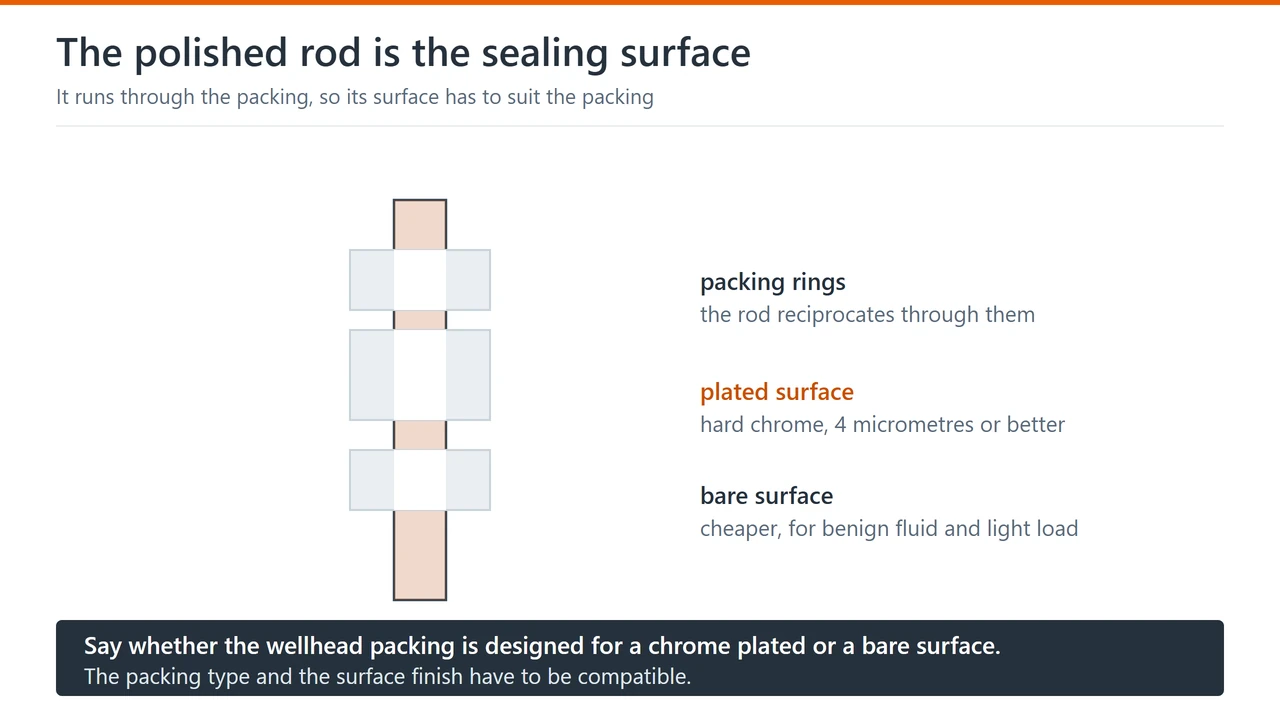
The polished surface is subject to abrasive wear from the packing and to corrosion from produced fluids and from the atmosphere at the wellhead. Hard chrome plating, typically 0.05 to 0.15 mm thick with a hardness of 800 to 1000 HV, markedly improves wear resistance and reduces friction against the packing, extending both rod and packing life. Where the well is sour, the plating and the base material must both be suitable for the service, because an improperly applied coating can contain residual stress and even small defects through which hydrogen can enter the base metal. An alternative is a stainless steel or nickel based overlay applied by welding, which gives better corrosion resistance than chrome and is used in high chloride or CO2 environments. When replacing a polished rod, note whether the wellhead packing is designed for a chrome plated or a bare surface, since the packing type and the surface finish must be compatible.
Polished rods: surface finish and the seal above it
The polished rod is the only part of the string worked by a seal, so surface finish and straightness matter more than they do on a standard rod. It is machined and ground, the top end is made up to the carrier bar, and the bottom end carries the standard sucker rod thread.
| Well or string condition | What it drives | What to state on the enquiry |
|---|---|---|
| Standard beam pumping well | Ground and polished, in the standard grade for the load | the size, the length, and the grade |
| Stuffing box wear | Surface hardness and finish set the seal life | the box type, so the finish can be matched to it |
| Corrosive produced fluid | Chrome plated, or a stainless overlay | the fluid, and the wellhead pressure |
| Sour service | Grade and hardness restrictions apply | the H2S level |
| Heavy load | A larger diameter, or a higher grade | the polished rod load |
| Length adjustment | Lengths are in 2 ft increments and the clamp area is fixed | the required length, and the clamp position |
| Top end connection | Polished rod thread, with or without a coupling | whether a coupling is to be supplied |
What is the difference between a polished rod and a sucker rod?
A polished rod sits at the top of the string and is the only rod that passes through the wellhead stuffing box, so its surface is precision ground and polished to about 0.4 micrometres and often chrome plated to seal against the packing and resist wear. A sucker rod has a rougher forged surface and is joined by couplings throughout the string. The polished rod’s top end uses a longer polished rod thread for the clamp, and its bottom end uses a standard sucker rod pin.
Should I choose a chrome plated or a bare polished rod?
Chrome plated is generally preferred because it reduces wear on both the rod and the packing and gives a longer service life, particularly in wells with abrasives or with frequent pumping cycles. A bare polished rod is cheaper and is used where the produced fluid is benign and the load is light. In sour service, confirm that the coating is suitable and that the base material meets NACE MR0175, and match the packing material to the rod surface.
Grades supplied
| Grade | Minimum tensile strength | Where it is chosen |
|---|---|---|
| K | 586 MPa (85,000 psi) | Corrosive produced fluids, where cyclic stress and corrosion act together |
| C | 620 MPa (90,000 psi) | Moderate loads — the middle step between K and D |
| D | 793 MPa (115,000 psi) | High rod loads: deeper wells, larger pumps, heavier or more viscous fluid |
| KD | Sour service grade | Where wet H2S is present and NACE MR0175 applies |
| HL | — | Supplied to order; the requirement is confirmed on the quotation |
| HY | — | Supplied to order; the requirement is confirmed on the quotation |
Standards, inspection and delivery
| Item | Detail |
|---|---|
| Standard | API 11B, API 11BR, NACE MR0175 |
| Inspection | Surface finish and diameter measurement; Tensile and hardness testing; Thread gauging to API 11B; Ultrasonic inspection; Chrome plating thickness check where coated; Third-party inspection (SGS, BV, TUV) |
| Documents | Mill test certificate to EN 10204 3.1 with the heat number, chemical analysis and mechanical results; EN 10204 3.2 on request. Packing list travels with the shipment. |
| Packing | Individual with thread protectors and polished surface protection |
| MOQ | 50 pieces depending on size |
| Lead time | 20 – 35 days depending on grade and size |
| Supply | Sourced through partner mills; the producing mill is named on the quotation. |
Download Polished Rod data sheet (PDF) One page: supply range, grades and key sizes, what to state on the enquiry, and the inspection documents that come with the order. The standard is the governing document.
Where to go next
- API 11B sucker rod – the rod grades every accessory below is matched to
- Sucker rod coupling – coupling class, thread and the rod sizes it fits
- Stuffing box – the seal between the polished rod and the wellhead
Materials
- Carbon steel
- Alloy steel
- Stainless steel coating
Typical applications
- Beam pumping units
- Wellhead stuffing box sealing
- Rod pumped artificial lift
- Sour service completions with appropriate grade
- Heavy oil wells
Inspection & testing
- Surface finish and diameter measurement
- Tensile and hardness testing
- Thread gauging to API 11B
- Ultrasonic inspection
- Chrome plating thickness check where coated
- Third-party inspection (SGS, BV, TUV)
| Packaging | Sea-worthy export packing: bundled in steel-strapped racks, thread protectors fitted, tagged with size, grade and heat number. |
|---|---|
| MOQ | One bundle (by set); mixed sizes accepted. |
| Lead time | Stock sizes: 7-15 days. Made to order: 4-6 weeks after order confirmation. |
Payment: T/T 30% deposit with the balance before shipment; L/C at sight also accepted. Final terms are confirmed on the quotation.
How we supply: sourced through partner mills; the producing mill is named on the quotation. How we supply sets out who is accountable for the order.
Need this product? Send the size, grade, quantity and destination port and we will reply with availability and pricing.
Request a quotation