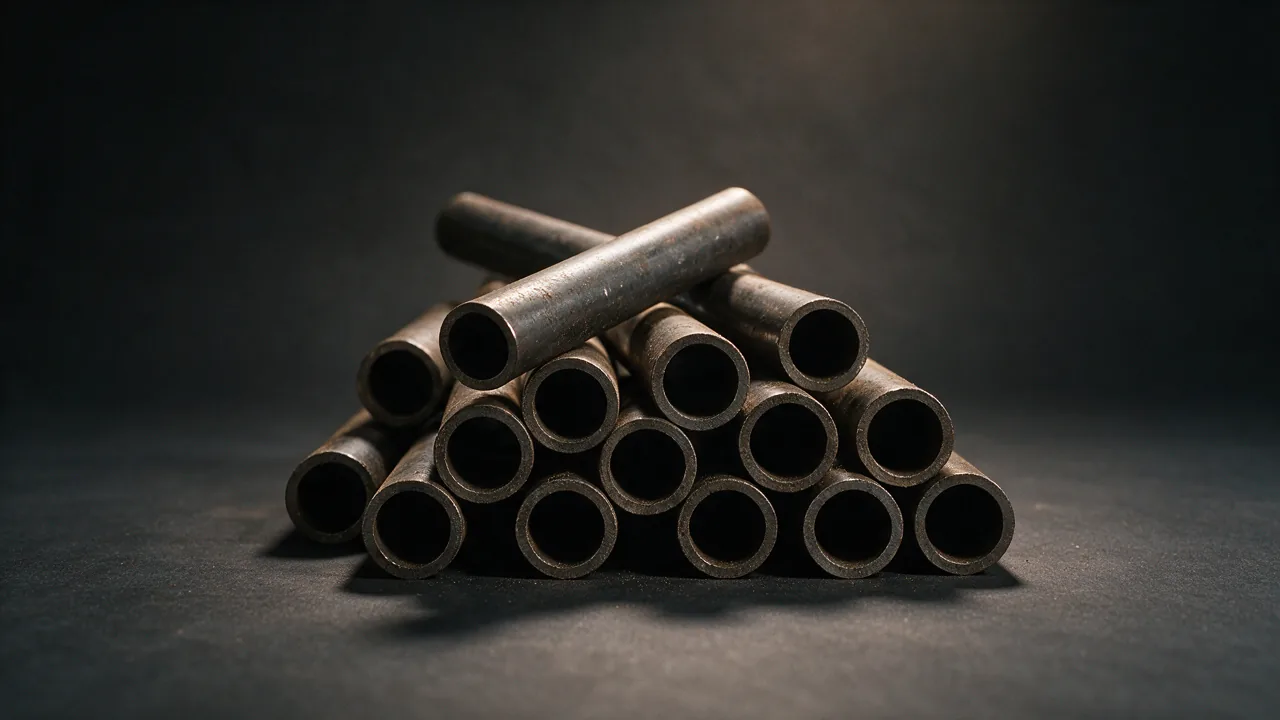
Seamless carbon steel pipe to ASTM A106 Grades A, B and C for high temperature service. The standard material for boiler, refinery and process piping.
- Standard: ASTM A106, ASME B36.10, ASME B36.19
- Grades: Grade A, Grade B, Grade C
- Certificate: EN 10204 3.1 with every order, 3.2 on request
Mejor Steel is the export agent for the mills that make your material: one contract, one delivery date, and the mill named on the quotation. How we supply
We reply within one business day, Monday to Friday 09:00-18:00 CST. Or write to info@mejorsteel.com / WhatsApp.
Specifications
| Outer diameter | 1/8" - 48" (10.3 - 1219 mm) |
|---|---|
| Wall thickness | SCH 10 - SCH XXS |
| Schedule | SCH 10, 20, 40, 60, 80, 100, 120, 140, 160, XXS |
| Length | SRL 5.8 m, DRL 11.8 m, 20 FT, 40 FT, or custom |
| Ends | Plain, beveled, threaded |
| Surface treatment | Black painting, varnish, galvanized, 3PE, FBE |
| Manufacturing process | Hot rolled seamless, cold drawn seamless |
| Pressure rating | High temperature and high pressure service |
The Standard for High Temperature Service
ASTM A106 covers seamless carbon steel pipe intended for high temperature service, typically for conveying water, oil, gas and slurry at elevated temperature and pressure. The specification requires seamless construction, and pipe is supplied either hot finished or cold drawn. Grade B is by far the most widely used and is found throughout refinery, boiler and power plant piping. The material is readily weldable, is available in a very wide range of sizes and schedules, and has a large body of established welding procedures behind it, which is why engineers reach for it by default when a carbon steel pipe is needed at temperature.
Grade A, B and C Compared
ASTM A106 defines three grades that differ mainly in tensile strength. Grade A has a minimum tensile strength of 330 MPa (48,000 psi) and a minimum yield of 205 MPa (30,000 psi). Grade B has a minimum tensile of 415 MPa (60,000 psi) and a minimum yield of 240 MPa (35,000 psi). Grade C has a minimum tensile of 485 MPa (70,000 psi) and a minimum yield of 275 MPa (40,000 psi). Grade B accounts for the overwhelming majority of demand. Grade C is specified when higher strength is needed but a low alloy steel would be uneconomic or would introduce welding complications. The carbon content also increases from A to C, which progressively reduces weldability, so higher grades require more careful welding procedures.
Sizes and Schedules Most Often Quoted
ASTM A106 Grade B is quoted from 1/2 in (21.3 mm) up to 24 in (610 mm) seamless. The sizes that move are 2 in, 3 in, 4 in, 6 in and 8 in, and a 6 inch seamless pipe in Grade B is the single most common way an A106 enquiry is written. Wall thickness is normally given as a schedule rather than as a millimetre figure, so the phrase is usually written as a 6 inch SCH 40 seamless pipe or a 6 inch SCH 80 pipe. SCH 40 and SCH 80 are the two schedules supplied most often; STD and XS are also common and coincide with SCH 40 and SCH 80 at the sizes above 10 in. Because the schedule sets the wall and the wall sets the weight, give the size and the schedule together – the schedule chart on this site lists the wall thickness for every schedule in ASME B36.10M.
A106 pipe: temperature decides more than the grade does
ASTM A106 is the seamless carbon steel pipe specification for high temperature service and it has only three grades. Most of the decision is not the grade at all but the wall, the length and whether the pipe will be threaded, bent or welded, because the pipe is normally selected against a design temperature rather than a pressure.
| Service condition | What it decides | What to state on the enquiry |
|---|---|---|
| Steam or process line above about 425 C | Grade C rather than Grade B, or an alloy pipe in place of carbon steel | the design temperature, not only the design pressure |
| Refinery or boiler piping at moderate temperature | Grade B covers most of this service | grade, schedule, and the length range |
| Heat exchanger or instrument connection | Small bore and thin wall, usually cold drawn to tighter tolerance | whether cold drawn tolerances are required |
| Threaded and coupled line | The wall has to survive the thread depth | state ‘threaded and coupled’, and the thread standard |
| Pipe that will be bent | Wall thinning at the bend has to be allowed for | the bend radius, and whether minimum wall after bending applies |
| Corrosive or wet service | Carbon steel may need an internal lining or a different family altogether | whether an internal lining is required |
Can ASTM A106 pipe be used at low temperature?
No, ASTM A106 is not intended for low temperature service. The standard assumes ambient to elevated temperature conditions. Below about minus 29 degrees C, the carbon steel loses notch toughness and becomes susceptible to brittle fracture. For low temperature service you should specify ASTM A333 pipe, which uses killed steel with controlled chemistry and is impact tested at the service temperature. Grades 1, 3, 4, 6, 7, 8 and 11 cover ranges from minus 45 degrees C down to minus 101 degrees C.
Is ASTM A106 Grade B the same as API 5L Grade B?
They have identical minimum yield strength (240 MPa / 35,000 psi) and minimum tensile strength (415 MPa / 60,000 psi) for seamless pipe, so in mechanical terms they are interchangeable. The standards differ in scope and testing. A106 permits only seamless construction and is written for high temperature service; API 5L permits both seamless and welded and includes pipeline-specific requirements such as PSL2 chemistry limits and impact testing. Where a project allows it, pipe is often dual certified to A106 B, A53 B and API 5L B, which is commonly marketed as three standards pipe.
What is the maximum wall thickness available in A106 pipe?
Standard schedules run from SCH 10 up to SCH XXS, and heavy wall pipe beyond XXS can be produced to order. In practice the upper limit depends on the mill and the diameter. For a 6 inch pipe, XXS corresponds to 21.95 mm wall. Larger diameters with heavy walls are more commonly supplied as LSAW or forged rather than seamless.
Grades supplied and minimum properties
The grade fixes the minimum strength and the chemistry. The table below gives the requirements that separate the ASTM A106 grades ordered most often; the full composition and mechanical table for each grade is on its own page.
| Grade | Yield strength | Tensile strength |
|---|---|---|
| Grade A | 205 MPa (30,000 psi) | 330 MPa (48,000 psi) |
| Grade B | 240 MPa (35,000 psi) | 415 MPa (60,000 psi) |
| Grade C | 275 MPa (40,000 psi) | 485 MPa (70,000 psi) |
The complete chemistry and mechanical table for each grade, with the notes that qualify it, is on the individual grade page – for example ASTM A106 Grade B pipe. Grade B is the grade behind almost every enquiry; Grade C is ordered where the higher strength is worth the tighter weldability control.
Source: specified minimum yield and tensile strength for each grade, per ASTM A106 / ASME SA106, Table 2. The standard is the governing document.
- Grade A
- Grade B
- Grade C
Download ASTM A106 Seamless Carbon Steel Pipe data sheet (PDF) One page: supply range, grades and key sizes, what to state on the enquiry, and the inspection documents that come with the order. The standard is the governing document.
Materials
- Carbon steel
Typical applications
- Boiler and superheater piping
- Refinery process piping
- Heat exchanger connections
- Power plant steam lines
- High temperature industrial piping
Inspection & testing
- Ultrasonic testing
- Hydrostatic pressure test
- Tensile and yield testing
- Flattening, bend and hardness test
- Chemical composition analysis
- Third-party inspection (SGS, BV, TUV)
| Packaging | Sea-worthy export packing: bundled by size, plastic caps on both ends, corrosion protection on request, stencilled with size, grade and heat number. |
|---|---|
| MOQ | One bundle or one truckload; mixed sizes within a bundle accepted. |
| Lead time | Stock sizes: 7-15 days. Mill run / non-stock: 4-6 weeks after order confirmation. |
Payment: T/T 30% deposit with the balance before shipment; L/C at sight also accepted. Final terms are confirmed on the quotation.
How we supply: sourced through partner mills; the producing mill is named on the quotation. How we supply sets out who is accountable for the order.
Need this product? Send the size, grade, quantity and destination port and we will reply with availability and pricing.
Request a quotation