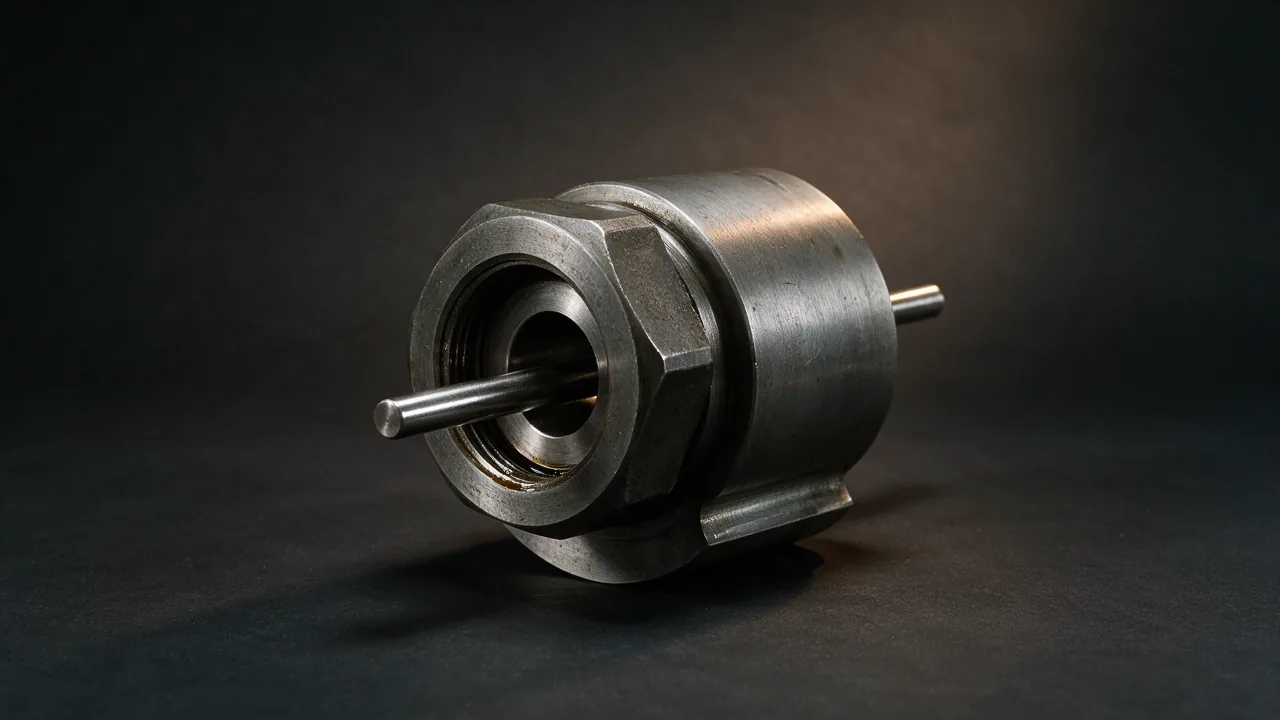
Wellhead stuffing boxes for rod pumping wells, sealing between the polished rod and the wellhead, in standard and high pressure designs.
- Standard: API 11B, API 6A, NACE MR0175, ASTM A29
- Grades: A105, A350 LF2, F316
- Certificate: EN 10204 3.1 with every order, 3.2 on request
Mejor Steel is the export agent for the mills that make your material: one contract, one delivery date, and the mill named on the quotation. How we supply
We reply within one business day, Monday to Friday 09:00-18:00 CST. Or write to info@mejorsteel.com / WhatsApp.
Specifications
| Outer diameter | For 3/4" - 1-1/2" polished rods |
|---|---|
| Length | Per box type |
| Ends | Threaded or flanged wellhead connection |
| Surface treatment | Painted or galvanized |
| Manufacturing process | Cast, forged and machined |
| Pressure rating | Standard up to 1000 psi, high pressure up to 5000 psi or higher |
| Connection type | Screw type, or with lubricator and bleed valve |
Function and Sealing Principle
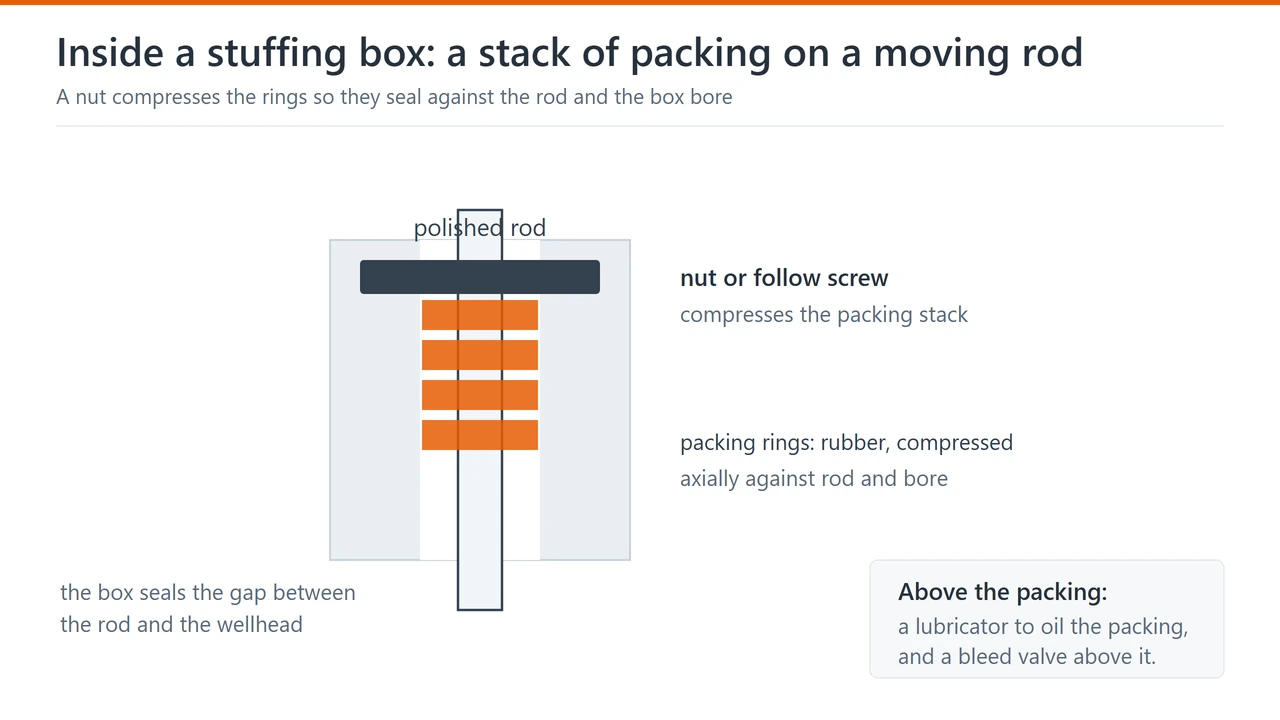
The stuffing box seals the small annular gap between the polished rod and the wellhead as the rod reciprocates. It is the primary barrier that stops well fluids and gas from escaping at the wellhead. Sealing is achieved by a stack of elastomeric packing rings compressed axially by a nut or a follow screw, which forces the rings into contact with the polished rod and the box bore. A lubricator, or oil saver, is often fitted above the packing so that oil can be introduced to lubricate and cool the packing, and a bleed valve allows the pressure to be released before the packing is adjusted or changed. Because the packing is a wearing item, it is expected to be tightened periodically and replaced at intervals; the key to long packing life is to keep the polished rod surface smooth, straight and free of burrs, since a rough rod will cut the packing quickly.
Standard and High Pressure Stuffing Boxes
Stuffing boxes are selected by the wellhead pressure and by the polished rod size. A standard box is used for wells with low wellhead pressure and ordinary service. A high pressure box has a heavier body, more packing rings and often a secondary seal or a hydraulic feature, and is used where the wellhead pressure is high, where the well produces gas, or where an unexpected pressure surge is possible. A related consideration is sour service: where H2S is present the body material and the packing must both be compatible, since standard packing compounds can degrade and lose sealing in sour conditions. Many operators also specify a stuffing box with an anti-rotation or a self-aligning feature to accommodate slight misalignment between the polished rod and the wellhead, which is a common cause of premature packing failure.
Stuffing boxes: the seal and the wellhead pressure limit
The stuffing box seals the annulus between the polished rod and the wellhead and is the part that most often leaks on a rod pumped well. The design follows from the wellhead pressure and from whether the well produces casing gas, and the box has to be matched to the polished rod size and to the pumping tee it sits on.
| Well or string condition | What it drives | What to state on the enquiry |
|---|---|---|
| Standard rod pumped well | Standard box, rated to about 1000 psi | the polished rod size, and the wellhead pressure |
| High wellhead pressure | High pressure design, up to 5000 psi or higher | the shut in pressure |
| Well with casing gas | A lubricator and bleed arrangement | the casing gas pressure |
| Sour service | NACE compliant material | the H2S level |
| Polished rod wear | The packing type and the box design set the seal life | the rod finish, and the produced fluid |
| Field servicing | Packing has to be replaceable without pulling the string | whether routine packing changes are expected |
| Connection to the pumping tee | Screwed or flanged, matching the tee | the tee connection |
| Temperature and fluid | The elastomer choice follows the fluid | the produced fluid and the temperature |
How often should stuffing box packing be replaced?
It depends on the well conditions and the polished rod surface condition. Packing is normally tightened progressively as it wears and replaced when it can no longer be tightened, or when leakage begins. The single biggest factor in packing life is the polished rod: a smooth, straight rod with a good surface finish can give months of service, while a rough or bent rod can destroy packing in days. Check the polished rod surface whenever the packing is serviced.
Do I need a high pressure stuffing box?
You need a high pressure box where the wellhead pressure is high, where the well produces gas that can surge, or where the well may be flowed or injected intermittently. A standard box is adequate only for low pressure, ordinary service. The box pressure rating should also be checked against the wellhead equipment rating so the seal is not the weak point. State the expected maximum wellhead pressure when enquiring.
What the packing choice actually depends on
Packing material is not chosen by preference; it is chosen by what the well produces and by the polished rod surface it runs against. Three inputs decide it, and all three come from the well programme rather than from a catalogue:
| Input | Why it decides the material | What to send |
|---|---|---|
| Produced fluid | H2S, CO2 and aromatic content rule out or require specific elastomers and compounds | Fluid analysis or the well programme |
| Temperature at the wellhead | Sets which compounds keep their elasticity and which harden and leak | Wellhead temperature range |
| Polished rod condition | A scored or bent rod destroys packing whatever the material; surface finish matters more than grade | Rod diameter, surface condition, straightness |
Two failure modes drive most call-outs. Packing that is incompatible with the produced fluid swells or hardens within days instead of wearing gradually, and a box that is tightened to stop a leak on a damaged polished rod simply transfers the wear to the rod. Both are decided by the data above, not by tightening harder.
What to send with a stuffing box enquiry
- Polished rod diameter, and the wellhead connection the box has to make up to.
- Wellhead pressure, and whether the well produces casing gas or is subject to intermittent flow or injection.
- Whether a standard box is acceptable or a high pressure box is required, and how many packing rings the box has to carry.
- Packing requirement: whether packing is supplied fitted, and the fluid and temperature data the material has to suit.
- Whether a secondary or injection-type seal is needed, and whether the well has to stay on production during repacking.
- Certification, marking and whether a third party inspects before shipment.
Packing grade and box selection are confirmed against the well data supplied by the buyer. Where the fluid or temperature data is not available, the box is quoted to the stated pressure class and rod size and the packing is confirmed before dispatch.
Grades supplied and minimum properties
The grade fixes the minimum strength and the chemistry. The table below gives the requirements that separate the forged fitting grades ordered most often; the full composition and mechanical table for each grade is on its own page.
| Grade | Yield strength | Tensile strength |
|---|---|---|
| A105 (forged carbon steel) | 250 MPa (36,000 psi) | 485 MPa (70,000 psi) |
| F316 (forged stainless steel) | 205 MPa min (30,000 psi) | 515 MPa min (75,000 psi) |
The complete chemistry and mechanical table for each grade, with the notes that qualify it, is on the individual grade page – for example ASTM A105 flange. The stainless grade has the higher tensile requirement but the lower minimum yield strength, so the two are not interchangeable on the strength table alone. The body material has to suit the produced fluid; the sealing element is chosen separately from the grade.
Source: specified minimum yield and tensile strength for each grade, per ASTM A105 / ASME SA105 and ASTM A182 / ASME SA182. The standard named against each grade is the governing document.
Download Stuffing Box data sheet (PDF) One page: supply range, grades and key sizes, what to state on the enquiry, and the inspection documents that come with the order. The standard is the governing document.
Materials
- Cast or forged carbon steel
- Stainless steel
- Elastomer packing
Typical applications
- Sealing the wellhead around the polished rod
- Rod pumped oil and gas wells
- Wells with casing gas or high pressure
- Sour service wells with NACE material
- Field servicing and replacement
Inspection & testing
- Hydrostatic pressure test
- Dimensional inspection
- Material certification
- Hardness testing
- PMI where required
- Third-party inspection on request
| Packaging | Sea-worthy export packing: bundled in steel-strapped racks, thread protectors fitted, tagged with size, grade and heat number. |
|---|---|
| MOQ | One bundle (by set); mixed sizes accepted. |
| Lead time | Stock sizes: 7-15 days. Made to order: 4-6 weeks after order confirmation. |
Payment: T/T 30% deposit with the balance before shipment; L/C at sight also accepted. Final terms are confirmed on the quotation.
How we supply: sourced through partner mills; the producing mill is named on the quotation. How we supply sets out who is accountable for the order.
Need this product? Send the size, grade, quantity and destination port and we will reply with availability and pricing.
Request a quotation