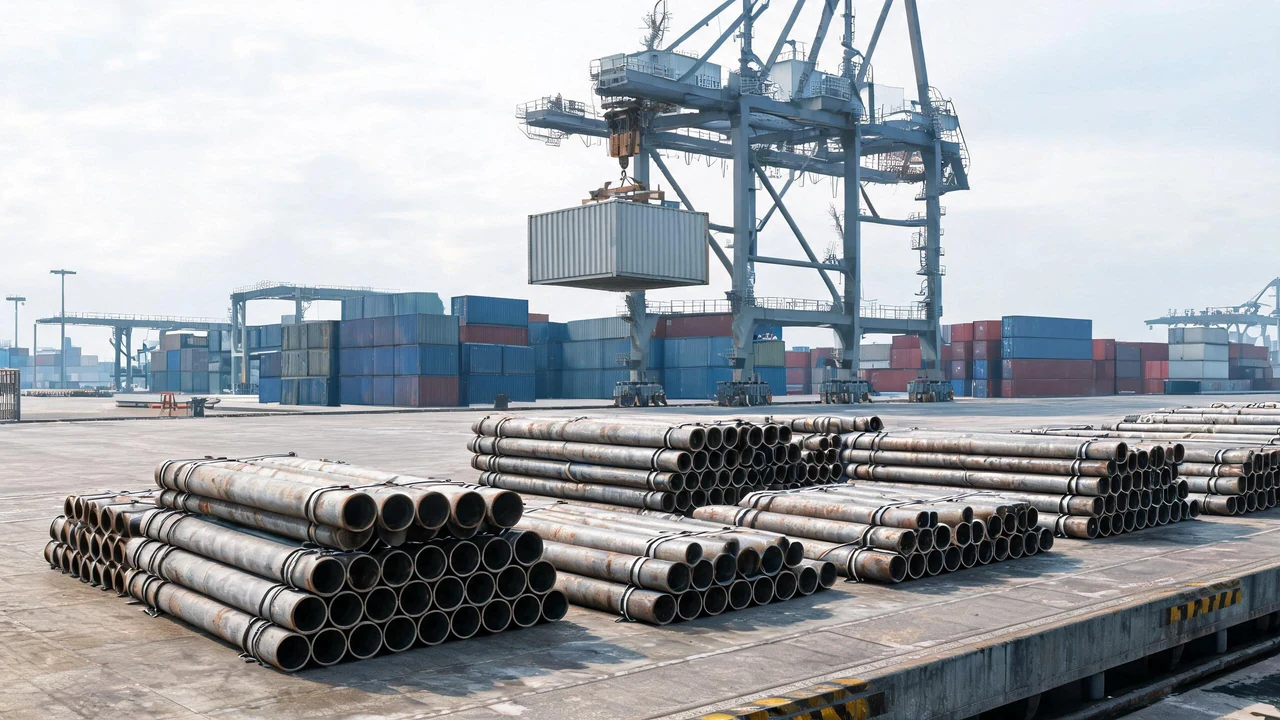
Most pages that rank for Indonesian pipe enquiries were written for another market and reused, which leaves the import file unaddressed. This page covers the API 5L grades and specification levels Indonesian buyers order, the documentation route through INSW, and the standards question that decides whether the pipe can be released for use.
Mejor Steel is the export agent for the mills that make your material: one contract, one delivery date, and the mill named on the quotation. How we supply
We reply within one business day, Monday to Friday 09:00-18:00 CST. Or write to info@mejorsteel.com / WhatsApp.
Grades and product specification levels
Grade B and X42 to X70 cover most Indonesian enquiries. PSL2 is specified where the project needs a carbon equivalent cap, impact testing and a defined non-destructive inspection scope – gas transmission work normally lands here – while PSL1 remains common for water and utility lines. Where the service contains hydrogen sulphide in the presence of water, the order moves to the sour service route; our sour service page sets out how that is decided.
Two questions that decide an Indonesian order
Does an SNI standard apply? Indonesia’s national standards are published as SNI, and mandatory certification applies to specified products and uses rather than to every steel pipe. The two things that decide it are the product and its end use. Confirm the position with the importer’s certification body before the order is priced: a certification route discovered after production is a delay, and discovered after shipment it is a hold at the port.
Who files the import documentation? Import licensing and customs documentation in Indonesia run through the Indonesia National Single Window (INSW). The account belongs to the importer and its broker; a supplier cannot file in the importer’s name. What the supplier controls is that the invoice, packing list, bill of lading and certificates describe the same goods in the same terms, so the declaration is built on facts rather than on an interpretation of a vague description.
What this changes in the order
- Describe the goods exactly. Write the standard, grade, outer diameter, wall thickness, length, end finish and coating in the same wording as the certificates; the classification and the certificate file both depend on it.
- State the end use. Water transmission, gas transmission and structural use attract different requirements, and the answer on SNI follows from the use.
- Fix the certificate type early. A mill certificate issued by the mill’s own inspection department is EN 10204 3.1; where the project wants independent verification it needs to be ordered as 3.2, because that inspection has to be witnessed at the point of test.
- Say whether the cargo re-exports. Batam and the Singapore transshipment route change the document trail, and the trade term has to match how the cargo is handed over – containerised bundles and breakbulk lengths do not follow the same rule.
Delivery into Indonesia
Tanjung Priok (Jakarta), Surabaya and Belawan are the usual discharge ports, with Batam relevant where the pipe moves on. Bundles that fit a 40 ft container travel as container cargo; 12 m lengths and large diameters normally travel as breakbulk, where FOB, CFR and CIF apply as written. Under CFR and CIF the risk passes when the pipe is on board in China, so the buyer’s own cargo cover is what protects the consignment from that point. The comparison is on our Incoterms page.
What to send with the enquiry
- API 5L grade and PSL, with the edition the project works to.
- Outside diameter, wall thickness, length and end preparation; state minimum wall or nominal wall.
- Coating or lining, and whether impact testing is required, with the design temperature.
- End use, and whether an SNI certificate is required for that product and use.
- Quantity in tonnes and in lengths, delivery window, discharge port and trade term.
- Certificates and inspection: EN 10204 3.1 or 3.2, third party inspection, and whether a witnessed test is required.
Frequently asked questions
Does steel pipe need SNI certification to be imported into Indonesia?
It depends on the product and its end use: SNI mandatory certification applies to specified products, not to everything in a tariff heading. The check is made against the product and the application with the importer’s certification body, before the order is placed, because a certification route added later moves the delivery date rather than the pipe.
Can you handle the Indonesian import documents?
We issue the documents that describe the goods: commercial invoice, packing list with bundle numbers and weights, bill of lading or multimodal document consistent with the term, mill test certificates traceable to the heat numbers, and a certificate of origin where a preferential rate is claimed. Import licensing and the declaration itself run through INSW in the importer’s name, which is not something a supplier can file.
Which grades are normally ordered for Indonesian gas lines?
Grade B and X42 to X70, most often in PSL2 where the project imposes a carbon equivalent cap, impact testing and a defined non-destructive inspection scope. The grade choice follows what is sizing the wall – the rule is set out on our X65, X70 and X80 comparison page.
Where to go next
- Steel pipe into Indonesia – the market overview and the two decisions that decide an order.
- API 5L line pipe – grades and dimensions.
- Mill test certificate – how to specify and check it.
- Third party inspection – nodes, documents and who attends.
- Get a quote – send the specification, the port and the term.
Quoting API 5L line pipe into Indonesia? Send the grade and PSL, the diameter and wall, the length, the end use and the port. We describe the goods exactly as the certificates do, so the declaration is built on facts.
Request a quotation