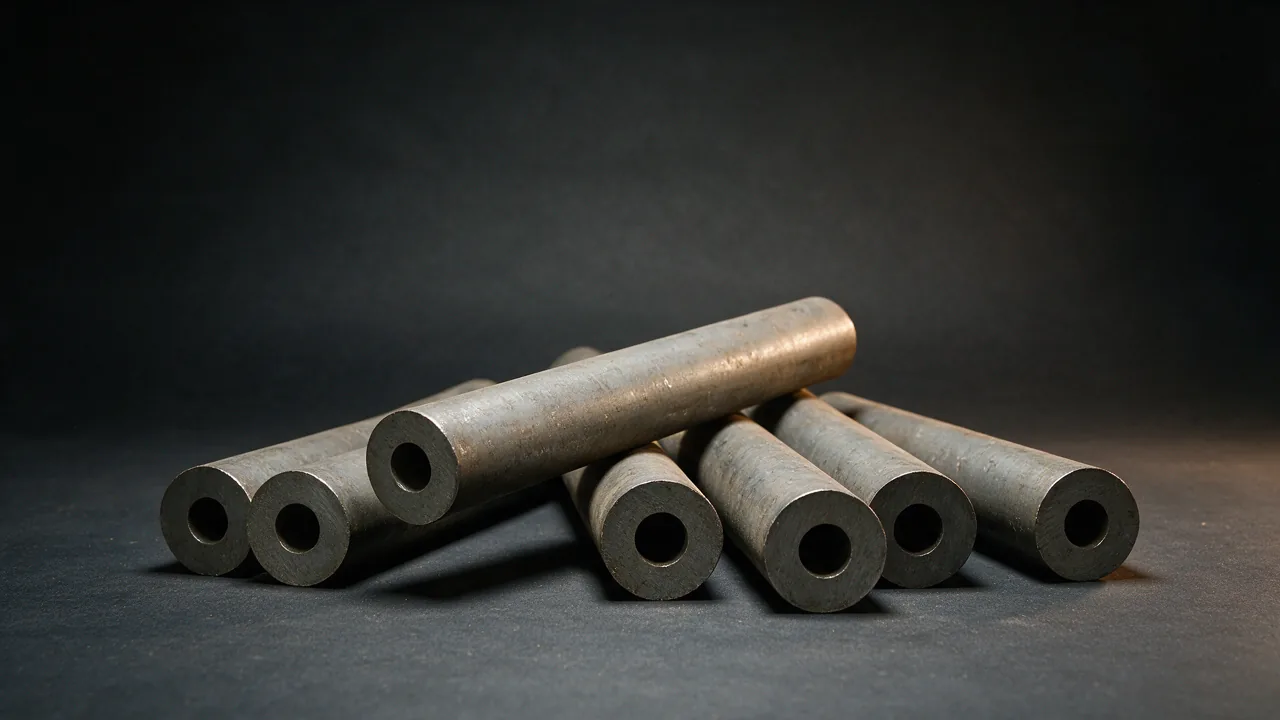
Seamless ferritic alloy steel pipe to ASTM A335, grades P5, P9, P11, P12, P22, P91 and P92, for high temperature and high pressure service in power and petrochemical plants.
- Standard: ASTM A335, ASME B36.10, ASME B36.19
- Grades: P1, P2, P5, P9, P11, P12, P22, P23, P91, P92
- Certificate: EN 10204 3.1 with every order, 3.2 on request
Mejor Steel is the export agent for the mills that make your material: one contract, one delivery date, and the mill named on the quotation. How we supply
We reply within one business day, Monday to Friday 09:00-18:00 CST. Or write to info@mejorsteel.com / WhatsApp.
Specifications
| Outer diameter | 1/8" - 36" |
|---|---|
| Wall thickness | SCH 10 - SCH XXS |
| Length | SRL, DRL, 20 FT, 40 FT, or custom |
| Ends | Plain, beveled, threaded |
| Surface treatment | Black painting, varnish |
| Manufacturing process | Hot finished seamless, cold drawn seamless |
| Pressure rating | High temperature and high pressure service |
What Chrome Moly Pipe Is and Why It Is Used
ASTM A335 pipe is a ferritic alloy steel containing chromium and molybdenum as the principal alloying additions. Chromium improves resistance to oxidation and to high temperature hydrogen attack, while molybdenum raises the creep strength at elevated temperature. Plain carbon steel loses significant strength above roughly 425 degrees C and is susceptible to graphitization and hydrogen attack, so alloy pipe takes over where steam temperatures and pressures climb. The grades form a ladder of increasing alloy content and temperature capability: P11 (1.25 Cr, 0.5 Mo) is the workhorse for main steam up to about 565 degrees C, P22 (2.25 Cr, 1 Mo) extends the range, and P91 (9 Cr, 1 Mo, V, Nb) is used in supercritical and ultra-supercritical units.
The same chromium-molybdenum grades are supplied as alloy steel butt weld fittings, with the fitting grade matched to the pipe grade.
Specification and Welding Considerations
Chrome moly pipe requires preheat and post-weld heat treatment to avoid hydrogen cracking and to restore the heat affected zone properties. Preheat temperature typically ranges from 150 degrees C for P11 up to 200 to 250 degrees C for P91. After welding, post-weld heat treatment at a controlled temperature and hold time is mandatory. Hardness limits are usually imposed on the finished weld, for example a maximum of 350 HV for P91. For this reason chrome moly pipe is normally supplied with a full heat treatment record and, where specified, hardness survey data. When ordering, state the grade, size, schedule, quantity, end finish and whether a hardness survey or supplemental NDE is required.
A335 pipe: chrome content is the temperature rating
ASTM A335 grades are ferritic alloy steels and the number after the P states the chrome and molybdenum content: P5 for 5% chrome, P9 for 9% chrome, P11 for 1.25%, P22 for 2.25% – and P91 and P92, also 9% chrome but modified with vanadium and niobium for creep strength. Service temperature, and whether the line carries hydrogen, decide which one applies.
| Service condition | What it decides | What to state on the enquiry |
|---|---|---|
| Steam line to about 540 C | P11 or P22, depending on the wall and the pressure | the design temperature and pressure together |
| Steam above 565 C | P91 or P92, the creep strength enhanced grades | whether the design requires a Code Case or a project specification |
| Hydrogen service | The chrome content is set by the hydrogen partial pressure | the hydrogen partial pressure and the applicable design curve |
| Sour service | Hardness and chemistry limits apply on top of the grade | NACE MR0175, or the project specification |
| Reformer or fired heater | Seamless, often cold drawn at small diameters | whether the item is pipe or tube, since different specifications apply |
| Field welding of P91 or P92 | Controlled preheat and post weld heat treatment are mandatory | whether post weld heat treatment is in the supplier’s scope |
| Forged replacement part | A335 is pipe; A182 is the matching forged grade | whether a forging rather than pipe is required |
What is the difference between P11 and P22 pipe?
P11 contains 1.25 percent chromium and 0.5 percent molybdenum; P22 contains 2.25 percent chromium and 1 percent molybdenum. The higher alloy content in P22 gives it greater creep strength and better high temperature performance, so it can be used at higher steam temperatures, typically up to about 580 to 600 degrees C against roughly 565 degrees C for P11. P22 is also more expensive and requires tighter welding control, so the choice is normally driven by the design steam temperature and pressure.
Why is P91 pipe specified for supercritical boilers?
P91 is a 9 percent chromium, 1 percent molybdenum alloy with vanadium and niobium additions that produce a tempered martensitic microstructure with very high creep strength. This allows much thinner walls than P22 for the same pressure and temperature, which reduces thermal stress during startup and shutdown and lowers the weight of the piping system. Its low thermal expansion coefficient also improves fatigue performance in cyclic operation. The trade-off is that P91 demands stringent welding and heat treatment control, and hardness must be verified on every weld.
Grades supplied and minimum properties
The grade fixes the minimum strength and the chemistry. The table below gives the requirements that separate the ASTM A335 grades ordered most often; the full composition and mechanical table for each grade is on its own page.
| Grade | Yield strength | Tensile strength |
|---|---|---|
| P11 | 205 MPa min (30,000 psi) | 415 MPa min (60,000 psi) |
| P22 | 205 MPa min (30,000 psi) | 415 MPa min (60,000 psi) |
| P91 | 415 MPa min (60,000 psi) | 585 MPa min (85,000 psi) |
The complete chemistry and mechanical table for each grade, with the notes that qualify it, is on the individual grade page – for example ASTM A335 P91 pipe. The three grades are chosen for the temperature they hold, not for the strength: P11 for service to about 1,000 degrees F, P22 above it, and P91 for main steam and reheat lines.
Source: specified minimum yield and tensile strength for each grade, per ASTM A335 / ASME SA335. The standard is the governing document.
- P1
- P2
- P5
- P9
- P11
- P12
- P22
- P23
- P91
- P92
Download ASTM A335 Alloy Steel Pipe data sheet (PDF) One page: supply range, grades and key sizes, what to state on the enquiry, and the inspection documents that come with the order. The standard is the governing document.
Materials
- Chrome-moly alloy steel
- Low alloy steel
Typical applications
- Power plant main steam and reheat lines
- Petrochemical furnace and reformer piping
- Hydrogen service and hydroprocessing units
- High temperature heat exchangers
- Boiler superheater and reheater tubing
Inspection & testing
- 100% ultrasonic testing
- Hydrostatic pressure test
- Tensile, yield and elongation testing
- Hardness testing across the wall
- Chemical analysis including chromium and molybdenum
- Third-party inspection (SGS, BV, TUV)
| Packaging | Sea-worthy export packing: bundled by size, plastic caps on both ends, corrosion protection on request, stencilled with size, grade and heat number. |
|---|---|
| MOQ | One bundle or one truckload; mixed sizes within a bundle accepted. |
| Lead time | Stock sizes: 7-15 days. Mill run / non-stock: 4-6 weeks after order confirmation. |
Payment: T/T 30% deposit with the balance before shipment; L/C at sight also accepted. Final terms are confirmed on the quotation.
How we supply: sourced through partner mills; the producing mill is named on the quotation. How we supply sets out who is accountable for the order.
Need this product? Send the size, grade, quantity and destination port and we will reply with availability and pricing.
Request a quotation